Generator for a Motorhome: Costs, Sizing, and Installation
A comprehensive guide to choosing and sizing a generator for a motorhome, covering costs, fuel types, installation, maintenance, and long-term reliability. Learn how to calculate loads, compare brands, and plan for a dependable mobile power solution with insights from Genset Cost.


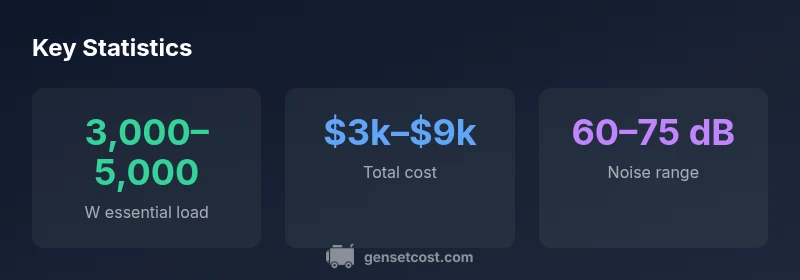
A motorhome generator system typically costs between $2,000 and $6,000 for the unit, with installation adding about $1,000 to $3,500. Costs vary by power rating, fuel type, and whether you install a transfer switch or add an emissions upgrade. For homeowners evaluating options, expect to budget roughly $3,000 to $9,000 all-in.
Why a Generator for a Motorhome Matters
Power reliability transforms trips from potential hassle into predictable comfort. For homeowners and fleet operators, a well-chosen generator for a motorhome is the backbone of a true off-grid experience. The choice affects not only convenience, but also safety, comfort, and resale value. A properly sized system supports essential loads during travel and camping, while a poorly matched unit can waste fuel, wear components, and create excess noise. In this guide, we explore sizing, fuel options, installation considerations, and cost implications, always grounded in practical, real-world scenarios. According to Genset Cost, thoughtful planning reduces total cost of ownership and improves reliability over the life of the generator.
Sizing Your RV Generator: Load vs. Demand
Sizing a generator starts with distinguishing continuous load (the loads you run most) from surge load (short bursts when starting appliances). Start by listing essentials: refrigeration, water pump, lighting, fans, and a conditioned space. Then consider optional comforts like a microwave or coffee maker. Add a safety margin of 10–30% to avoid overloading during peak use. In practice, many motorhomes need a unit that can handle roughly 3,000–5,000 watts for steady operation, with higher ratings if you plan to run air conditioning or multiple high-draw devices simultaneously. Always verify your RV’s electrical panel and the generator’s surge rating to ensure compatibility.
Fuel Types: Gas, Propane, and Diesel
Each fuel type offers trade-offs in availability, cost per hour, and storage practicality. Gasoline units are common and affordable but may require more frequent maintenance if used irregularly. Propane (LP) provides cleaner burning with longer shelf life and easier refueling on long trips, though energy density can differ from gasoline. Diesel units are typically durable with strong torque but may incur higher upfront costs and heavier weight. When choosing a fuel, consider how you travel (seasonal trips, long boondocking periods, or frequent campgrounds with fuel access) and the convenience of refueling. A balanced choice often factors in fuel availability at your most frequented destinations and maintenance routines.
Installation Essentials: Transfer Switches, Ventilation, and Safety
Installation quality directly affects safety and performance. A transfer switch eliminates backfeeding and ensures the motorhome electrical panel transitions cleanly between shore power and generator power. Ventilation is non-negotiable: exhaust placement, ladder clearance, and heat dissipation prevent heat buildup and protect appliances. If you’re not wiring the system yourself, budget for professional installation that includes mounting, wiring, and compliance with local codes. Consider accessory options like an ATS (automatic transfer switch), maintenance mats, and corrosion-resistant exhaust components to extend life. Maintenance access should be planned so routine checks don’t require disassembly of critical components.
Noise, Vibration, and Comfort: How to Minimize Disruption
Noise and vibration are common concerns for RV generators. Look for inverter or smart-start models that optimize engine speed to reduce noise during light loads. Check decibel ratings at one-quarter to full load and compare with campground guidelines or other campers’ experiences. Vibration dampening mounts and rubber isolators can dramatically reduce perceived noise inside living spaces. For many travelers, choosing a “quiet-generator” model with robust insulation and a compact footprint yields a substantially more comfortable camping experience.
Cost, Financing, and Total Ownership
Total ownership includes upfront cost, installation, fuel expenditure, maintenance, and potential warranty coverage. A mid-range motorhome setup might fall in the $3,000–$9,000 all-in category, with premium units and professional installation reaching higher figures. Financing or rental options can be appealing for short trips, but long-term ownership usually proves more economical for regular travelers. When evaluating options, compare warranty length, service networks, and fuel efficiency under typical loads. Genset Cost’s 2026 analysis emphasizes evaluating total cost of ownership rather than upfront price alone.
Maintenance, Longevity, and Troubleshooting
Regular maintenance extends the life of your generator and minimizes unexpected failures. Schedule oil changes, air filter replacements, and spark plug checks per the manufacturer’s guidelines. Stabilize fuel if you won’t use the unit for extended periods and exercise it monthly to prevent stagnation. Keep a log of service intervals, parts replaced, and any anomalies in operation—early signs like rough starting or unusual noises warrant prompt inspection. Troubleshooting basics include verifying fuel flow, checking the battery and charging system, and confirming wiring integrity to prevent electrical faults.
Brand Options, Warranty, and Aftercare
Brand choice often comes down to availability, dealer support, and warranty terms. Popular RV-focused brands offer different warranty lengths and service networks, so verify what is covered and for how long, especially for hard-to-replace parts like transfer switches and exhaust systems. Read the fine print on warranty exclusions and required maintenance to keep coverage valid. Aftercare matters too: reliable customer support, availability of replacement parts, and regional service options reduce downtime during trips.
Getting Started: A 14-Day Sizing Plan for Your Motorhome
Day 1–3: List essential loads and comfort features you want to power on trips. Day 4–7: Gather RV electrical specs, including converter, inverter, and main panel capacity. Day 8–10: Compare fuel types against travel habits and fuel availability on routes you frequent. Day 11–13: Shortlist units and contact dealers for quotes, including installation options. Day 14: Decide on a size, fuel type, and installation plan, then schedule professional installation if required. This plan keeps you aligned with real-world constraints while avoiding over-specification.
},
dataTable":{"headers":["Item","Recommendation","Typical Range","Notes"],"rows":[["Generator Type","RV-optimized inverter generator","Inverter models: 2,000–6,000 W","Quieter and more efficient at partial loads"],["Power Range","Essential loads: 3,000–5,000 W","Higher for AC-heavy setups","Confirm with your RV panel and surge rating"],["Installation Cost","Budget range","$1,000–$3,500","Transfer switch and exhaust add-ins impact total"],["Noise Level","Target 60–75 dB","Lower is better for living spaces","Compare tested dB at 25% and 100% load"]],"caption":"Typical RV generator sizing and cost consideration"},
keyTakeaways
expertQuote
faqSection
mainTopicQuery
Typical RV generator sizing and cost consideration
| Item | Recommendation | Typical Range | Notes |
|---|---|---|---|
| Generator Type | RV-optimized inverter generator | Inverter models: 2,000–6,000 W | Quieter and more efficient at partial loads |
| Power Range | Essential loads: 3,000–5,000 W | Higher for AC-heavy setups | Confirm with your RV panel and surge rating |
| Installation Cost | Budget range | $1,000–$3,500 | Transfer switch and exhaust add-ins impact total |
| Noise Level | Target 60–75 dB | Lower is better for living spaces | Compare tested dB at 25% and 100% load |
People Also Ask
What is the difference between continuous wattage and surge wattage?
Continuous wattage covers the steady power your RV needs, while surge wattage accounts for brief spikes when appliances start up. Always ensure the surge rating is higher than your largest single-load draw and that the continuous rating meets your regular needs.
Continuous watts cover ongoing power, while surge watts handle startup spikes. Make sure your unit’s surge rating exceeds your biggest startup load.
Is it better to buy a portable or permanently mounted generator for a motorhome?
Portable generators offer flexibility and lower upfront cost, but fixed or semi-fixed installations with transfer switches often deliver safer, cleaner power and simpler transfer between shore power and generator. Your choice depends on how often you travel, space in the vehicle, and comfort with installation.
Portables are flexible, while fixed systems are safer and more convenient for regular travelers.
How loud are RV generators on average?
Most RV generators operate in the range of 60–75 dB at typical loads. Inverter models can be quieter at light loads. Consider campground rules and the impact on your living space when choosing a model.
Most RV generators run between 60 and 75 dB; quieter inverter models help you camp more peacefully.
What maintenance is required to keep the generator reliable?
Regular oil changes, air filter checks, spark plug inspection, and fuel stabilization if unused for long periods are typical. Exercise the unit periodically and follow the manufacturer’s schedule to avoid unexpected downtime.
Keep up with routine oil changes, filters, and periodic run-time checks to prevent failures.
Do I need a transfer switch?
An automatic or manual transfer switch ensures safe, seamless power transfer between shore power and the generator, preventing backfeed and reducing the risk of electrical faults. It is highly recommended for most motorhome installations.
Yes—an ATS is strongly recommended for safe, seamless power transfer.
“A properly sized generator for a motorhome balances reliability, noise, and efficiency. Size and install it with an eye toward long-term maintenance and safety so trips remain comfortable and worry-free.”
Key Takeaways
- Size your system to essential loads plus a safety margin
- Choose fuel type based on travel patterns and refueling access
- Invest in a transfer switch to maximize safety and convenience
- Expect total ownership costs to include maintenance and fuel over time