Generator to House Connection: A Complete How-To for Homes
Learn how a generator to house connection works, how to size it, essential components, safety basics, and when to hire a pro for a code-compliant installation.


A generator to house connection enables a home to switch from utility power to a backup generator during outages without backfeeding the grid. The setup requires a transfer switch, proper sizing, professional installation, and permits. In this guide, you’ll learn how to size, plan, and hire for a compliant connection that protects your home and grid.
What is a generator to house connection?
According to Genset Cost, a generator to house connection enables a home to switch from utility power to a backup generator during outages without backfeeding the grid. The core idea is a transfer switch that isolates the house wiring from the utility and a controller that starts the generator when needed. A well-designed connection protects your home, keeps neighbors safe, and helps utilities maintain service during widespread outages. For homeowners, understanding this concept is the first step to making informed choices about sizing, installation, and ongoing maintenance. The Genset Cost team emphasizes that a properly implemented connection can reduce outage frustration while aligning with safety codes and utility requirements. This guide will break down sizing, components, and the steps to hire a pro for code-compliant installation.
Sizing and Load Calculations
Sizing a generator to house connection starts with identifying essential loads, the devices you can't live without during an outage, and the high-draw appliances you can shed. Begin by listing rooms and circuits that you want powered, including lighting, refrigeration, sump pumps, heating or cooling equipment, medical devices if any, and communications gear. Then estimate each device's starting wattage and running watts. A common approach is to calculate the total running wattage and apply a surge factor for start-up, but never rely on a single guess. By focusing on essential loads, you can determine a target generator size and then see if you need a larger unit or a more limited load plan. Genset Cost notes that many homes opt for a mid-range standby generator sized to cover essential loads, with the option to add improvements later. This keeps upfront costs reasonable while preserving critical functionality during outages.
Key Components and Options
The core components of a safe generator to house connection include an automatic or manual transfer switch, a transfer switch enclosure, a reliable generator, appropriate fuel supply, and a properly sized feeder to the main panel. An automatic transfer switch (ATS) senses a utility outage and starts the generator, then smoothly transfers the load away from the grid. A manual transfer switch requires you to start the generator and flip the switch yourself. Interlock kits can also provide a code-compliant alternative to a full ATS for certain panel configurations. Ensure the generator is sized for your needs and that fuel storage complies with local regulations. Consider weather-appropriate enclosures and ventilation to protect equipment and reduce noise.
Installation considerations: permits, codes, and safety
Electrical work for a generator connection must meet national and local codes, including NEC guidelines for backfeed protection, grounding, and safe disconnects. In most jurisdictions, a permit is required, and a licensed electrician should perform or supervise the installation. A proper transfer switch must isolate the home from the utility to prevent backfeeding, protecting utility workers and your equipment. Grounding and bonding of the generator should follow the NEC and manufacturer recommendations. Location choice matters: keep the generator outside, on a level pad, with adequate ventilation and clearance from doors, windows, and combustible materials. Always read the owner’s manual for installation specifics and never modify factory protections. If in doubt, consult your local electrical inspector or a licensed pro.
Manual vs automatic transfer switch: what to choose
Choosing between manual and automatic transfer switches depends on your goals, tolerance for outage duration, and budget. An ATS provides automatic starting and switching during power outages, preserving appliances and comfort with minimal attention. A manual switch is more affordable upfront and requires you to start the generator and switch power manually, which can be acceptable for seasonal or occasional outages. Automatic systems typically deliver faster power restoration and smoother operation, but they demand a larger upfront investment and more complex maintenance.
Costs and budgeting: typical ranges
Costs vary by generator capacity, switch type, installation complexity, and local labor rates. A small portable generator plus a basic manual transfer switch can cost roughly $1,500–$3,500, including installation. A mid-size home standby system with an automatic transfer switch usually ranges from $4,000–$15,000 installed, depending on labor, panels, and fuel type. A full-house standby with natural gas or propane supply can push installed costs beyond $15,000 at times. Ongoing costs include fuel, maintenance, and potential fuel storage upgrades. It's essential to factor in startup surges and future expansion when budgeting.
How to hire a pro and what to expect
Start by gathering quotes from licensed electricians or generator installers. Ask for proof of license, insurance, and references; verify permits with the local building department. Request a written scope, timeline, and warranty details. The process typically includes an on-site load calculation, equipment selection, panel modification or upgrade, and inspection by the authority having jurisdiction. Expect a site visit, a formal proposal, and an installation window that aligns with utility and permit timing.
Maintenance and long-term considerations
Preventative maintenance is essential for reliability. Schedule oil changes, battery checks, fuel stabilization, and air-filter inspections according to the manufacturer’s schedule. Regularly inspect connections, vent openings, and protective enclosures. Keep a service log and plan annual professional inspections, especially before winter outages or seasonal storms. A well-maintained system reduces the risk of failures when you need power most.
Tools & Materials
- Safety gear (gloves and safety glasses)(ANSI-rated PPE; use for all electrical work)
- Voltage tester / multimeter(Non-contact tester for live checks; regular multimeter for load verification)
- Wire strippers/crimping tool(Appropriate gauges for feeder wiring)
- Torque wrench(Ensure correct lug torque on panel connections)
- Transfer switch kit or automatic transfer switch (ATS)(Match to panel capacity and generator size)
- Generator fuel supply (gasoline/propane/natural gas)(Fuel type coordinated with generator and supply lines)
- Grounding rod and bonding materials(Per local code and NEC guidance)
- Enclosure or pad with ventilation(Outdoor-rated, weather-resistant, placed for safe exhaust)
- Permit documents and inspection coordination(Include electrical and building permits)
- Electrical tape and sealants(Weatherproofing and sealing penetrations)
Steps
Estimated time: 3–7 hours on-site for installation, plus permit processing time varies by locale
- 1
Assess power needs
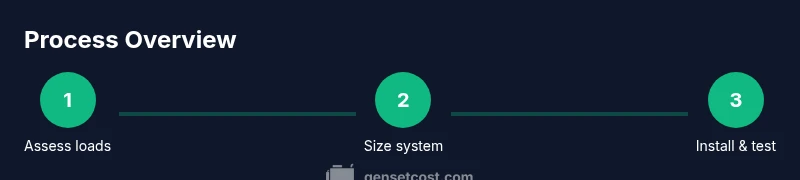
Create a list of essential circuits and appliances you want powered during an outage. Gather current and starting wattage for each item, and total the running and starting loads. This assessment lays the foundation for accurate sizing and avoids overspending.
Tip: Document each device’s startup surge to prevent under-sizing. - 2
Choose transfer switch type
Decide between an Automatic Transfer Switch (ATS) and a Manual Transfer Switch. ATS starts the generator automatically during outages and switches loads, while a manual switch requires your action to energize the system.
Tip: If outages are frequent in your area, an ATS minimizes downtime and improves reliability. - 3
Determine generator size and fuel type
Select a generator sized to cover your essential loads plus some headroom for startup. Choose a fuel type that aligns with availability and storage, such as natural gas or propane, and verify supply capacity for peak demand.
Tip: Avoid oversizing solely for luxury loads; prioritize critical circuits first. - 4
Plan siting and protective measures
Choose an outdoor location with ventilation, weather protection, and safe clearance from doors, windows, and combustible materials. Plan wiring routes and ensure proper enclosure for sound and weather resistance.
Tip: Check local setback rules and ensure adequate drainage around the pad. - 5
Obtain permits and hire a licensed pro
Work with a licensed electrician to apply for electrical and building permits. Have a clearly defined scope of work, timeline, and warranty expectations in writing.
Tip: Keep all permit documents and receipts for home insurance and resale value. - 6
Test, commission, and schedule maintenance
Conduct a full system test with the utility off, verify automatic starting and transfer, and document results. Establish a maintenance schedule for oil changes, fuel stabilization, battery checks, and annual professional inspections.
Tip: Test monthly or quarterly to ensure readiness before storms.
People Also Ask
What is a generator to house connection?
A generator to house connection uses a transfer switch to safely route power from a standby generator to home circuits while isolating them from the utility grid. This prevents dangerous backfeed and protects workers and equipment.
A generator to house connection uses a transfer switch to safely route power from a standby generator to your home and stops backfeed to the grid.
Do I need a transfer switch?
Yes. A transfer switch is essential for safe operation and code compliance. It prevents backfeeding, protects utility workers, and ensures orderly power transfer.
Yes. A transfer switch is essential for safety and code compliance.
Can I install this myself?
This work should be performed by a licensed electrician with permits. Attempting to wire directly into a panel without training is dangerous and often illegal.
This is not a DIY project. Hire a licensed electrician and obtain permits.
What size generator do I need?
Size depends on your essential loads and starting wattage. Do a load calculation, then select a unit with some headroom for startup surges.
Size depends on essential loads; perform a load calculation to pick the right size.
What permits are typically required?
Most areas require electrical and building permits, plus an inspection by the local authority. Your installer should handle this as part of the project.
Usually permits are required and inspections are done after installation.
What maintenance is required after installation?
Follow the manufacturer’s maintenance schedule for oil, fuel, and battery. Schedule annual professional checks and conduct periodic functionality tests.
Maintain oil, fuel, battery, and perform routine tests to keep it reliable.
Watch Video
Key Takeaways
- Assess essential loads before sizing equipment.
- Choose ATS for seamless, code-compliant operation.
- Hire a licensed pro to manage permits and installation.
- Plan for maintenance to ensure reliability.
- Expect costs to vary with system size and installation complexity.