How to Choose and Use a Generator to Run Your House
Step-by-step guide to sizing, selecting, and operating a generator to run your house during outages, covering fuel choices, cost ranges, transfer switches, safety, and maintenance.


This guide shows you how to select and size a generator to run a house during outages, compare fuel types, estimate upfront and ongoing costs, and plan a safe installation. You’ll learn how to calculate essential loads, choose a compatible transfer switch, and follow a practical, step-by-step process from assessment to reliable backup power.
What a generator to run house means and why sizing matters
A generator to run house is a standby power solution designed to automatically provide electricity when the grid goes down. For homeowners and property managers, it can mean the difference between a cold fridge, a dark living room, and a disrupted routine during outages. The core idea is to match a generator’s output to the actual needs of your home and to do so safely under local code requirements. Improper sizing—whether too small or too large—can create nuisance trips, wasted fuel, and unnecessary wear on equipment. The Genset Cost team emphasizes that the first step is understanding your essential loads and how they interact with your transfer mechanism. In practice, sizing involves two components: continuous loads that run regularly (refrigeration, lighting, electronics) and surge loads (HVAC, well pumps) that require a higher initial burst but only briefly. By focusing on essential circuits, you preserve fuel, minimize noise, and reduce carbon footprint while maintaining crucial comfort and safety during outages. The result is a more reliable system that aligns with your budget and long-term goals.
How to size a home backup generator: calculating loads
Start by listing all appliances and devices you want powered during an outage. Identify continuous loads that will run for extended periods and surge loads that spike at startup. Create a simple table listing each item with its approximate wattage or amperage, and group them by circuit or location. The goal is to determine a target continuous load (what the generator will run at once) and a peak surge that the unit must support for brief moments. Use a reputable sizing method such as a professional load calculation or a home energy audit. Avoid guessing; inaccuracies lead to oversized equipment that wastes fuel or undersized units that frequently trip. After you determine the essential circuits, you can translate the total into a generator rating that covers both continuous and surge requirements. Finally, factor in future needs, such as an expansion of living space or additional appliances.
Fuel options and efficiency: gas, propane, natural gas
Generators come in multiple fuel configurations, each with its own implications for availability, cost, and running efficiency. Gasoline-powered units are common for portable use, but gas lines or propane tanks offer cleaner storage and less frequent refueling. Natural gas can feed a standby system from the utility line, reducing the need to store fuel on site, but fuel supply depends on your service and pipe capacity. When evaluating fuel types, consider your outage frequency, climate, and willingness to schedule refueling. Efficiency matters too: higher efficiency models convert more of the fuel into usable electricity and produce less wasted heat. Fuel choice also affects noise, start reliability, and the overall energy footprint. Remember that fuel type not only affects upfront purchase price but also longer-term costs and maintenance needs.
Installation considerations: transfer switch, code compliance, and location
Most homes use an automatic transfer switch (ATS) to shift power from the grid to the generator when power is lost. This protects equipment, reduces back-feeding risk, and allows an automatic start/stop sequence. Installations must comply with local electrical codes and often require permits. Decide on an outdoor, weather-protected location with proper ventilation and clearance from structures. If you're not a licensed electrician, hire one for connection wiring, conduit runs, and fuel line safety. An annual inspection and a professional service visit help ensure continued safe operation.
Budgeting: upfront costs, running costs, maintenance
Total ownership cost includes the generator price, installation, transfer switch, fuel supply, and routine maintenance. Upfront costs vary widely based on size, features, and whether professional installation is included. Running costs depend on how often you use the unit and the price of fuel over time. Maintenance—oil changes, filter replacements, battery checks, and periodic exercise tests—prevents failures during outages. Create a simple budget that accounts for periodic fuel storage, insurance, and potential replacement parts. Use cost comparison tools to estimate total cost of ownership across several models and configurations.
Standby vs portable: which is right for you
Standby generators are permanently installed and wired to your electrical system, enabling automatic operation during outages. Portable generators are moved as needed and require manual startup and a transfer switch or manual backfeed. Standby models are typically larger and more expensive upfront but offer greater convenience and reliability, while portable units can be cheaper upfront but demand careful handling and more manual steps. Consider your home's critical loads, space, climate, and whether you want seamless operation or lower upfront risk.
The role of a professional load calculation and a Genset Cost comparison
Even though DIY calculations help, a professional load calculation from an experienced electrician or energy consultant ensures accuracy and compliance. Genset Cost provides AI-assisted guidance and comparisons to help you choose models that fit your loads and budget. Use official resources and our comparison toolkit to assess standby generator cost ranges, installation complexity, and warranty terms. A properly sized system reduces the chance of nuisance trips and ensures reliable power for critical circuits.
Quick-start checklist before you buy
- List essential loads and surges you need during outages
- Decide on fuel type based on availability and storage considerations
- Check local code requirements and permit needs
- Plan for a transfer switch and professional installation
- Compare total cost of ownership, not just upfront price
- Schedule a pre-purchase load calculation with a qualified pro
Tools & Materials
- Tape measure(Essential for measuring installation clearances and space.)
- Digital multimeter / clamp meter(Used to measure loads and verify circuit voltages.)
- Non-contact voltage tester(For quick safety checks before touching wires.)
- Transfer switch kit or ATS integration kit(Needed if not included with generator; ensures safe transfer.)
- Electrical conduit, fittings, and mounting hardware(Weatherproofing and code-compliant installation.)
- Fuel supply hardware (gas line regulator, propane fittings)(Ensure proper gas or propane connections per code.)
- Personal protective equipment (gloves, safety glasses)(Protective gear for installation and testing.)
- Owner’s manual and maintenance log(Reference for start-up procedures and servicing.)
Steps
Estimated time: 8-16 hours
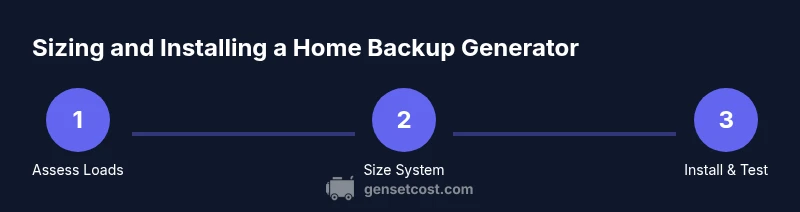
- 1
Assess essential loads
Create a detailed list of appliances and systems you want powered during outages. Include refrigerators, freezers, sump pumps, heating/cooling, lighting, computers, and sensitive electronics. Group items by circuit and note any startup surges.
Tip: Start with the most critical loads first and mark surges to guide sizing. - 2
Measure and record load values
Gather wattage or amperage data for each item using labels, manuals, or a power meter. Sum continuous loads and add a margin for surge. Validate numbers by cross-checking with manufacturer specs.
Tip: When in doubt, rely on verified manufacturer data or a pro’s measurement. - 3
Choose a generator size and type
Decide between standby (automatic) and portable (manual). Ensure the unit’s continuous rating covers your base load and its surge rating handles startup spikes. Check compatibility with your fuel type and noise requirements.
Tip: Aim for a buffer of comfortable surplus to cover future needs. - 4
Plan transfer switch and electrical wiring
Design the circuit layout and select an appropriate ATS rating. Coordinate with a licensed electrician for wiring, conduit runs, and fuel line safety. Verify permit requirements with local authorities.
Tip: Have the electrician inspect the installation plan before wiring begins. - 5
Decide fuel type and storage logistics
Evaluate gasoline, propane, and natural gas options based on availability, storage, and climate. Consider long-term refueling logistics and regional fuel supply stability.
Tip: Prefer a fuel plan that minimizes on-site storage and handling risk. - 6
Install and perform initial test
Install the generator and transfer switch, then perform a controlled test run under no-load and then under load. Check safety clearances, exhaust routing, and alarms.
Tip: Always test with proper PPE and ensure ventilation. - 7
Set maintenance schedule
Create a recurring plan for oil changes, filter replacements, battery checks, and annual exercise runs. Maintain a service log and schedule professional inspections.
Tip: Document every test and service event for warranty compliance.
People Also Ask
What size generator do I need to run a typical house during an outage?
Sizing depends on your essential loads and surge requirements. A professional load calculation helps ensure the selected generator can handle ongoing needs and startup spikes. Always compare multiple models to find a comfortable margin above your calculated needs.
A professional load calculation is key to picking the right size; target your essential loads and account for startup surges.
Can I install a generator myself?
Electrical installations for home generators typically require a licensed electrician to ensure safety, code compliance, and warranty terms. Some steps, like fuel line setup and transfer switch wiring, are not suitable for DIY without proper training.
For safety and compliance, hire a licensed electrician for the installation.
What is a transfer switch and why is it required?
A transfer switch safely switches power from the grid to the generator and prevents backfeeding into the utility line. It’s essential for automatic operation and protecting both equipment and utility workers.
A transfer switch makes automatic, safe power transfer possible.
What fuel type is best for long outages?
Natural gas and propane offers more consistent refueling options than gasoline in many regions, but each fuel has trade-offs in cost, availability, and storage. Consider your outage frequency and local infrastructure when deciding.
Natural gas or propane can be easier to manage for longer outages depending on your home setup.
What maintenance does a home generator require?
Most generators need regular oil changes, air and fuel filter checks, battery tests, and periodic exercise runs. Keep a maintenance log and schedule professional servicing as recommended by the manufacturer.
Regular oil changes and periodic checks keep your generator reliable.
Watch Video
Key Takeaways
- Define essential loads before sizing
- Size for continuous load plus surge
- Choose fuel type based on availability and storage
- Plan for a transfer switch and qualified installation
- Budget for maintenance and regular testing