Generator X: A Comprehensive Comparison for Home Backup Power
An analytical comparison of Generator X against leading backup gensets. Learn sizing, costs, installation, fuel options, and maintenance to decide if Generator X is right for your home or rental property in 2026.


Generator X offers a balanced mix of cost, reliability, and installability for home backup needs. Compared with a typical mid-range model, Generator X delivers better fuel efficiency and a simpler transfer-switch, making it the strong default choice for homeowners and property managers evaluating backup power options. For larger homes or strict budget limits, consider alternatives; otherwise Generator X tends to provide the best overall value.
What is Generator X and Why It Matters
Generator X is designed to meet common home backup needs with a focus on reliable power, sensible sizing, and practical installation workflows. In 2026, consumers are increasingly evaluating not just the upfront sticker price but the total cost of ownership, including fuel, maintenance, and potential downtime. The term generator x refers to a class of mid-to-upper mid-range residential generators that balance performance with manageable installation requirements. From a homeowner's perspective, the objective is to minimize outages without overpaying for capacity that sits idle for most of the year. The Genset Cost team notes that this balance—cost, reliability, and ease of use—often translates into the best overall value for typical households.
How Generator X Fits Into Home Backup Solutions
When integrating a generator into a home electrical system, the goal is to cover critical circuits first and scalable loads second. Generator X is typically sized to sustain essential circuits such as refrigeration, medical devices, sump pumps, lighting, and a few central systems during outages. It pairs well with automatic transfer switches and modern home automation setups, allowing seamless handoff from grid to generator power. For property managers, Generator X can simplify tenant resilience with predictable maintenance windows and clearer fuel options. The strength of Generator X lies in its adaptability to various home layouts and load patterns, minimizing the need for constant downsizing or oversizing of systems.
Key Difference: Generator X vs. Competing Brands
The most meaningful differentiator for Generator X is its combination of efficiency, installability, and a broad compatibility profile. Competitors may offer higher peak output or lower upfront cost, but Generator X typically achieves stronger fuel efficiency and more straightforward transfer-switch integration. Space constraints, noise considerations, and emissions can also shift the evaluation in favor of Generator X for modestly compact installations. When assessing alternatives, consider how much of your time you’re willing to spend on maintenance and whether you require advanced diagnostics or simple, dependable operation.
Sizing and Cost Considerations for Generator X
Sizing a generator revolves around your critical-load profile and tolerance for outages. A typical recipe begins with calculating the wattage of must-have appliances and devices, then adding a buffer for surge loads. Generator X aims to cover essential loads with a comfortable margin, reducing the risk of nuisance shutdowns during transient spikes. In terms of cost, think in terms of total cost of ownership rather than upfront price alone. Maintenance costs, fuel consumption, and periodic part replacements accumulate over the life of the unit. For most homes, Generator X delivers a favorable balance between purchase price, operating costs, and long-term reliability.
Installation and Operational Costs
Installation costs hinge on panel configuration, transfer-switch type, and local code requirements. A straightforward installation with a 200-amp service and a basic automatic transfer switch is typically faster and less costly than more complex retrofits or upgrades to service capacity. Ongoing operational costs include fuel type and consumption, routine maintenance, and periodic inspections. Generator X often supports multiple fuel options, enabling you to switch between natural gas, propane, or diesel where permitted. Efficient fuel use and a well-planned maintenance schedule can lower running costs and extend the generator’s service life.
Fuel Type, Efficiency and Emissions
Fuel choice matters for long-term operating costs and environmental impact. Generator X commonly supports several fuel configurations, including natural gas, propane, and gasoline, with natural gas often offering the most convenient long-term fuel source for many homes. Efficiency tends to be favorable for Generator X compared with entry-level units, thanks to optimized engine design and smart control logic. Emissions profiles will vary by fuel and model; if you operate in a fuel-constrained environment or with strict emission requirements, verify the configuration that best aligns with your local regulations and long-term sustainability goals.
Reliability, Warranty, and Maintenance
Reliability is driven by engine design, cooling, and component quality, along with proper installation. Generator X typically includes standard warranties that cover parts and labor for a defined period, with extended warranty options available. Maintenance schedules usually call for oil changes, filter replacements, battery checks, and periodic load testing. Regular servicing helps prevent unexpected failures and reduces the chance of underperforming during outages. For property managers, a predictable maintenance cadence reduces management overhead and improves tenant trust during outages.
Real-World Scenarios: When Generator X Shines
In regions with moderate outage frequency and a mix of essential loads, Generator X shines by maintaining critical systems without overburdening the panel or escalating fuel costs. For households with larger dwellings or more aggressive comfort requirements, Generator X provides a pragmatic balance of capacity and efficiency, particularly when paired with a robust automatic transfer switch. Rental properties with shared circuits benefit from predictable performance and simpler maintenance planning, ensuring minimal downtime between outages. In all cases, correct sizing and proper installation are the keys to unlocking Generator X’s full value.
Potential Drawbacks and Notable Trade-offs
No solution is perfect for every scenario. Some users may find Generator X’s upfront cost higher than entry-level models, or that its size is more than what a small apartment requires. In regions with very high fuel prices or limited fuel supply, operating costs can be more sensitive to fuel choice and maintenance practices. Another potential trade-off is noise exposure; while Generator X often prioritizes quieter operation, excessively tight installation spaces can amplify noise perception. Balancing these factors against your goals is essential to a successful outcome.
Decision Framework: Which Scenario Is Best for Generator X
Use a simple decision framework: (1) Define critical-load requirements, (2) Estimate outage frequency and duration, (3) Assess available fuel and installation constraints, (4) Compare total cost of ownership across options, and (5) Consider the value of simplicity and reliability. For most homeowners, Generator X offers a strong balance of coverage, efficiency, and installability. Property managers may want to standardize on a single configuration to simplify maintenance across multiple units. If your priority is the absolute lowest upfront cost or ultra-quiet operation, review alternative models and verify the cost implications over the system’s lifetime.
How to Calculate Your Generator X Needs
Start by listing non-discretionary loads: refrigerator, HVAC controls, sump pump, lighting, and your internet/communication essentials. Assign wattage estimates to each item and add a 20-30% margin to account for startup surges. Verify your peak demand, then align it with Generator X’s rated capacity and its recommended operating range. Don’t forget to factor in battery backups, home automation devices, and any energy-intensive appliances you’d like to support during outages. After sizing, compare the chosen Generator X configuration against a few alternatives to ensure you’re not over or under-provisioning your system.
Regional Availability and Installation Constraints
Regional availability can influence both price and service levels. Some jurisdictions require specific permits or inspections for standby generators and transfer-switch installations. Local utility interconnection rules may also affect whether automatic transfer switches need to be installed or modified. If you’re a homeowner or property manager, consult local licensed electricians and verify that the proposed Generator X setup complies with code requirements and insurer expectations. This due diligence reduces delays and helps ensure a smooth, compliant installation.
Comparison
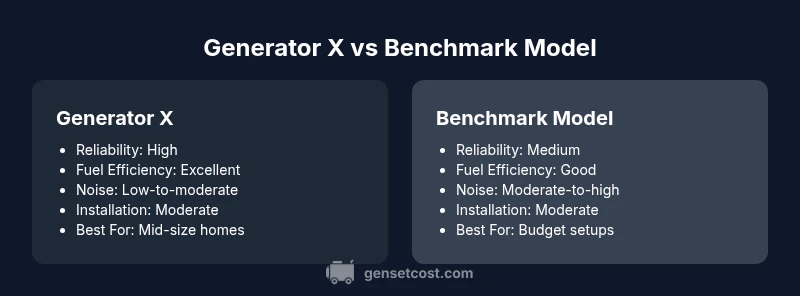
| Feature | generator x | benchmark model v2 |
|---|---|---|
| Reliability | High | Medium |
| Fuel Efficiency | Excellent | Good |
| Noise Level | Low-to-moderate | Moderate-to-high |
| Price Range | Mid-to-high | Mid-range |
| Best For | Homes with larger loads/critical circuits | Budget-conscious setups with simpler needs |
| Installation Complexity | Moderate (easier transfer switch) | Moderate to complex |
The Good
- Balanced cost-to-performance ratio for typical homes
- Relatively straightforward installation process
- Strong reliability for essential loads during outages
- Flexible fuel options enhance long-term planning
- Good compatibility with modern transfer switches
The Bad
- Higher upfront cost than entry-level models
- May be oversized for very small spaces or apartments
- Maintenance, while predictable, still requires regular scheduling
Generator X delivers the best overall value for most typical homes.
For average households, Generator X provides reliable power, efficient fuel use, and a straightforward installation. If you demand ultra-quiet operation or the absolute lowest upfront cost, evaluate alternatives and run a total-cost-of-ownership comparison.
People Also Ask
What is Generator X best used for in home backup applications?
Generator X is well-suited for mid-size homes with essential loads, such as refrigeration, heating, and lighting. It provides a comfortable margin to handle surge loads while avoiding excessive oversizing. This makes it a reliable option for typical outage scenarios and rental properties with predictable load patterns.
Generator X is a solid choice for essential-load outages in mid-size homes, offering reliable power with sensible margins.
How does Generator X compare with a typical gas-powered model?
Generator X generally offers better fuel efficiency and integrated transfer-switch options, which can reduce complexity and running costs. Gas-powered models may be cheaper upfront but can incur higher fuel costs over time and potentially more maintenance work.
Generator X usually beats typical gas models on efficiency and ease of integration, saving you money over time.
What loads can Generator X reliably support?
Essential loads like refrigeration, sump pumps, heating controls, lighting, and critical electronics are typically within Generator X’s reliable envelope. Heavier simultaneous loads may require a larger unit or staged operation.
Essential loads are well-covered; for peak demand, verify your specific device mix.
What factors affect installation costs?
Permits, transfer-switch type, panel compatibility, and local code requirements are key drivers. Existing electrical infrastructure and service capacity can also influence labor and inspection costs.
Permits and panel compatibility mainly determine installation costs.
Is Generator X compatible with propane or natural gas?
Yes, many Generator X configurations support propane or natural gas, but confirm model specifics and the availability of a reliable fuel supply line for your home.
Generator X often supports multiple fuels, check your model and supply lines.
How often should Generator X be maintained?
Follow the manufacturer’s intervals for oil changes, filter replacements, and battery checks. Schedule periodic load testing to ensure readiness during outages.
Keep to the maintenance schedule and do periodic load tests.
Key Takeaways
- Assess your essential-load profile before sizing generator x.
- Evaluate fuel options to minimize operating costs over time.
- Plan for transfer switches and installation with local codes.
- Review warranty coverage and maintenance needs for long-term value.
- Use the comparison table to validate Generator X against competitors.