Home Generator Near Me: A Comprehensive Sizing, Cost, and Local Options Guide
Find nearby home generator options, compare sizing, costs, and installation tips to keep your property powered during outages. Learn how proximity improves service and how to choose standby vs portable units.


Finding a home generator near me starts with sizing for essential loads and confirming local installation options. The closest providers often shorten lead times for both purchase and service, improving warranty support. For homeowners and property managers, prioritizing a standby unit sized for critical circuits typically yields the best resilience and faster activation during outages. Start by comparing nearby licensed installers and reputable brands.
Proximity matters: finding a generator near you matters for service, permits, and support
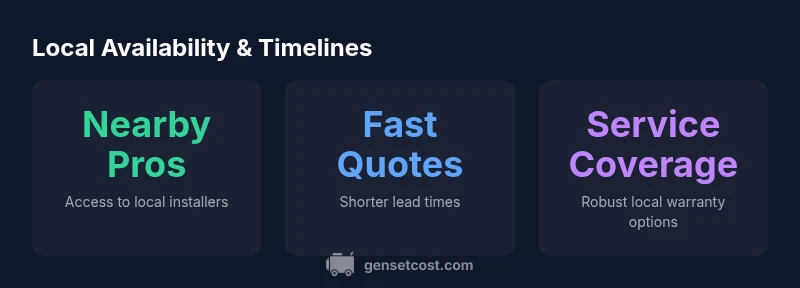
When searching for a home generator near me, one of the strongest advantages is access to local service teams and nearby suppliers. Proximity often translates to shorter lead times for procurement, quicker installation scheduling, and easier warranty claims. In many markets, licensed local installers have parts readily available and can coordinate with city permits more efficiently. From a homeowner’s perspective, this can reduce downtime during outages and minimize the risk of delays from distant vendors. The Genset Cost team emphasizes that nearby options simplify ongoing maintenance, emergency service, and transfer-switch replacements when needed. Consider proximity as a core criterion alongside size and price when evaluating quotes.
Standby vs portable vs hybrid backup: choosing the right type for your situation
There are several generator families to choose from, each with distinct advantages and trade-offs. Standby generators are permanently installed and automatically start during an outage, which is ideal for homes with critical circuits or multi-load scenarios. Portable units are lower in upfront cost and offer flexibility for occasional use but require manual setup and a transfer method. Hybrid or solar-assisted backups can cut fuel use and emissions but may involve more complex integration and higher initial costs. When you search locally, you’ll often encounter a mix of brands and configurations; the key is matching the type to your most essential loads and your tolerance for fuel, maintenance, and noise.
How to size: calculate loads, surges, and future needs
A precise size starts with a load calculation. List all essential circuits (fridge, lighting, heating, medical gear, sump pump) and estimate simultaneous load. Don’t forget surge requirement for motor loads (HVAC, well pumps). Compare these totals to generator rating curves, understanding that startup surges can exceed running watts. In practice, many homes protect essential circuits with a generator in the 8–22 kW range, while larger properties or whole-house systems may push higher. Work with a local installer who can perform a detailed load calculation and present a sizing plan that accommodates future needs.
Cost components you should expect (and how to plan for them)
The total cost of owning a home generator includes more than the unit price. Expect to budget for the generator itself, a transfer switch (automatic or manual), electrical wiring, permits, and potential trenching or gas line work. Local requirements vary, so installation costs can swing widely by region. Some quotes include routine maintenance or extended warranties, which can improve long-term value. When you compare bids, ensure you’re evaluating complete turnkey packages, not just the sticker price of the generator.
Finding a trusted local installer: service networks, warranties, and maintenance in your area
A strong local installer network offers predictable service windows, on-site training, and straightforward warranty handling. Ask about response times, parts availability, and what is covered under warranty after the installation. Warranties differ by brand and installer, so compare both product warranties and the service commitments offered in your region. Routine maintenance, annual inspections, and clean fuel supply can extend the life of your system and safeguard the backup power you rely on during outages.
Installation steps and the transfer switch: what actually happens
A typical installation includes securing the generator, routing fuel or electrical lines, and wiring the automatic transfer switch (ATS) if you choose a standby system. The ATS detects outages and starts the generator automatically, then restores power to your home. Experienced technicians ensure proper clearance, venting for exhaust, and code-compliant connections. Expect coordination with your utility or local authorities for permits and inspections. A well-executed installation minimizes nuisance outages and ensures safe operation.
Maintenance, reliability, and warranty best practices
Regular maintenance is essential for reliability and safety. Schedule annual inspections, test runs, and filter changes as recommended by the manufacturer. Keep warranty documentation and local service records organized for easy renewal or transfer. Reliability increases when the system has an up-to-date transfer switch, clean fuel supply, and attentive periodic testing. The brand you choose should offer robust after-sales support and clear guidance from their network of authorized technicians.
Financing options, incentives, and how to maximize value over time
Financing can ease the upfront burden of a standby system, and some utilities or manufacturers offer rebates or incentives that reduce effective costs. Consider total cost of ownership: upfront price, installation, ongoing maintenance, fuel or fuel alternatives, and potential energy savings during outages. For many homeowners and managers, a well-timed upgrade with a local installer yields a higher return on investment through reduced downtime and more predictable power resilience.
Step-by-step plan: from search to powered home (5 steps)
- Define essential loads and target outage duration. 2) Gather quotes from nearby licensed installers and compare service plans. 3) Confirm transfer-switch options and required permits. 4) Review warranties, maintenance commitments, and training provided. 5) Schedule installation and conduct a live test to verify seamless operation during an outage.
Comparison of generator options by size and install requirements
| Option | Typical Size (kW) | Avg Installed Cost Range | Pros | Cons |
|---|---|---|---|---|
| Standby Generator | 8-22 | varies by model | Automatic operation during outages; scalable power | Higher upfront cost; professional installation required |
| Portable Generator | 0.5-3 | varies by unit | Lower upfront cost; portable | Manual transfer and limited run-time |
| Hybrid/Whole-home Solar Backup | 3-10 | varies by system | Eco-friendly; quiet operation | Complex installation; higher initial cost |
People Also Ask
What should I look for in a nearby home generator installer?
Focus on licensed and insured professionals with local service networks. Verify their experience with ATS installations, permits, and post-install support. Ask for recent references and confirm that they provide a written, detailed sizing plan.
Look for licensed, insured local installers with ATS experience and clear references. Ask for a written sizing and installation plan.
How do I estimate my home's generator size?
Start with essential loads (fridge, lights, pumps, HVAC). Add starting wattage considerations for motor loads. A nearby installer can perform a formal load calculation and present a sizing plan tailored to your home.
Begin with essential loads and consult a local installer for a formal load calculation.
What are the main cost components I should expect?
Expect costs for the generator, installation, transfer switch, permits, and possible trenching or gas work. Ask for a turnkey proposal that itemizes each element so you can compare apples to apples.
Gen, install, transfer switch, permits, and possibly gas work—get a turnkey quote.
Is renting a generator a good option?
Rentals can be viable for short-term needs or trials but often cost more over time and may limit long-term reliability. Compare with owning a unit and factor maintenance into the decision.
Rentals work short-term but can be pricier long-term; compare with ownership.
What maintenance is required after installation?
Schedule annual inspections, test runs, and filter changes per the manufacturer. Keep maintenance records and confirm what is covered under warranty and by whom.
Annual checks, test runs, and record-keeping keep your system reliable.
“"Sizing, installation quality, and ongoing maintenance determine whether a generator protects your home when it matters most."”
Key Takeaways
- Prioritize proximity when selecting a nearby installer
- Size the generator to essential loads for reliability
- Account for complete costs: installation, permits, and transfer switches
- Verify installer qualifications and warranty coverage
- Consider financing and incentives to improve value