How to Use Generators: A Complete Homeowner Guide
Learn how to use generators safely for home backup. This guide covers sizing, transfer switches, fueling options, installation basics, and maintenance to keep essential loads powered during outages.


Wondering how do you use generators? This guide explains how to safely plan, size, install, start, run, and maintain a home backup generator. It covers load calculations, transfer-switch options, fueling choices, and routine maintenance so you can keep essential loads powered during outages. Whether you live in a storm-prone area or rely on a generator for critical equipment, this overview will help you start confidently.
Why understanding how do you use generators matters
Power reliability is a cornerstone of safe, comfortable home living and efficient property management. When you ask how do you use generators?, you’re really seeking a practical path from a machine to dependable power for essential systems like refrigeration, heating or cooling, medical devices, and home office equipment. The Genset Cost team notes that many homeowners underestimate the real-world load when storm prep begins, often missing critical circuits such as sump pumps or network gear. A clear plan reduces risk, avoids under-sizing, and minimizes needless spending on overbuilt systems. In this section we outline the mindset and the steps you’ll follow across sizing, placement, fuel planning, and safe operation so you can proceed with confidence and peace of mind.
How generators work in simple terms
At a basic level, a generator converts mechanical energy into electrical energy to power AC loads. A fuel source powers an engine that drives an alternator, creating alternating current that matches your home’s electrical system. Standby generators are permanently installed and can automatically start when the utility power fails, while portable units require manual startup. Understanding this difference helps in choosing the right type for your property and ensures that you can reliably power essential circuits during an outage. For most homeowners, the takeaway is: size to your actual loads, use a transfer mechanism to isolate from the grid, and run tests regularly to verify reliability.
Safe setup prerequisites for home use
Safety is non-negotiable when using generators. Start with outdoor placement on a stable pad, clear of doors, windows, and soffits to avoid exhaust intrusion. Install CO detectors near sleeping areas and inside the home’s main living zones. Never operate a generator indoors or in a garage, even with doors open. Use outdoor-rated cords and a correctly sized transfer switch to prevent backfeeding into the grid. Have a licensed electrician review wiring plans and pull any required permits. Finally, establish a clear shutdown procedure in case of an emergency, including access to fuel storage and fire safety equipment.
Sizing and load calculations for home backup
Accurate sizing starts with a load assessment. Identify essential circuits (refrigerator, sump pump, lights, internet/phone, HVAC controls) and estimate their running and starting watts. Compare these figures to generator-rated watts (continuous running watts). A practical rule of thumb is to target a generator in the range of several kilowatts to cover both running and surge needs, with a buffer to handle startup spikes. Don’t forget to account for future growth or seasonal loads. The goal is a balance between enough capacity and cost efficiency, so you aren’t paying for unused headroom or risking repeated outages from a gross under-sizing.
Wiring, transfer switches, and professional installation
The safest and most reliable method to connect a generator to a home is via a transfer switch—automatic or manual. A transfer switch isolates the house from the grid, preventing dangerous backfeed and enabling a clean transfer of power to essential circuits. Installation typically requires a licensed electrician, proper permits, and a load calculation review. If you opt for a standby system, expect a higher upfront cost and a more involved installation process, but enjoy automatic operation during outages. For portable generators, you’ll need a safe, compliant power inlet and a multi-pole transfer mechanism to avoid dangerous cross-connections.
Fuel types, storage, and maintenance routines
Fuel choice influences cost, availability, and reliability. Common options include natural gas, propane, and gasoline, each with benefits and constraints. Gas and propane offer quick refueling and lower storage risk than stored gasoline, but require a dedicated fuel line or tank. Maintain a strict fueling protocol, use fresh fuel, and drain or stabilize fuel for long storage periods. Establish a routine maintenance schedule: oil changes, filter checks, battery health, spark plug inspection, and CO detector tests. Schedule professional inspections before peak outage seasons and after severe weather events.
Cost considerations and budgeting for generator projects
Costs vary widely based on size, type, and whether you add a transfer switch, a permanent pad, or a professional installation. Typical projects include equipment, permits, wiring, and labor, with installation often driving a large portion of the budget. While price data varies, plan for a range that accommodates 5 kW to 20 kW systems with transfer switch and professional installation. Consider long-term operating costs, maintenance, and fuel type. Your budget should reflect the value of reliable power during outages, but also include contingencies for upgrades or expansion.
Common mistakes and best practices
Common mistakes include under-sizing, skipping an essential transfer switch, improper ventilation, and neglecting regular testing. Avoid placing the unit in protected, yet exhaust-vented locations; always use CO detectors and a proper exhaust routing. Regularly test run the system under load to validate performance, and keep spare parts like filters and spark plugs on hand. Best practices also include documenting a maintenance calendar, coordinating with the utility company if interconnection is involved, and engaging a licensed professional for initial installation and periodic inspections.
Tools & Materials
- Generator (portable or standby)(Select size based on load calculations; ensure electrical compatibility with your service panel)
- Transfer switch (manual or automatic)(Choose amperage (e.g., 60A, 100A, 200A) to match service)
- Outdoor-rated extension cords and adapters(Use heavy-gauge cords suitable for your generator's wattage)
- Weatherproof mounting pad or enclosure(Stable surface with adequate drainage and ventilation)
- CO detectors and a fire extinguisher(Place detectors in sleeping areas and main living spaces)
- Fuel supply and approved storage containers(Store gasoline safely; for gas or propane, ensure proper lines and tanks)
- Voltage tester/multimeter(Used for initial checks and during maintenance)
- Electrical permits and inspection documents(Check local codes and secure required approvals)
Steps
Estimated time: 4-8 hours
- 1
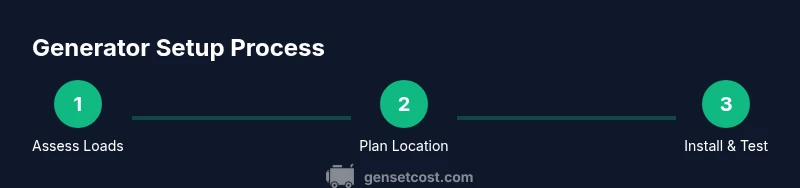
Assess loads and determine generator size
Identify essential circuits and estimate running and starting watts for each. Sum these to estimate total running watts, then add a 25–50% buffer for startup surges. Use this target to select a generator with adequate continuous and surge ratings.
Tip: Start with critical loads first; add mid-priority circuits later if you have headroom. - 2
Plan location and safety clearances
Choose an outdoor, well-ventilated location on a stable pad away from doors and windows. Ensure clearances for exhaust, fuel storage, and servicing access. Confirm there is a safe path for cords and wiring to the main panel.
Tip: Keep at least 3–5 feet of clearance around the unit and away from flammable clutter. - 3
Decide on transfer switch type and permit needs
Select an automatic or manual transfer switch based on budget and desired convenience. Contact your local authority about permits and inspection requirements before wiring begins.
Tip: Automated switches reduce outage time but add cost; plan accordingly. - 4
Engage a licensed electrician for installation
Have a qualified pro size, route wiring, and connect the transfer switch to your panel. Inspections and code compliance are essential for safety and insurance.
Tip: Ask for a written plan, permit numbers, and a risk assessment before work starts. - 5
Install generator and transfer switch
Set up the generator on its pad, connect fuel lines, and mount the transfer switch. Verify correct wiring, protection devices, and proper ventilation.
Tip: Double-check that the unit is locked out from the main panel when not in use. - 6
Connect fuel supply and perform leak tests
Attach fuel lines securely, check for leaks, and confirm safe storage practices. Run the unit through a test cycle with no load first, then under load.
Tip: Keep flammable liquids away; never test near ignition sources. - 7
Test run and establish maintenance cadence
Schedule regular test runs (monthly under no-load, quarterly under load). Create a maintenance calendar for oil changes, filter checks, and battery health checks.
Tip: Document every test and maintenance activity for future reference.
People Also Ask
What size generator do I need for my home?
Start with essential loads and calculate running and starting watts. Choose a generator that covers the total with a comfortable margin for startup surges. Larger homes or more appliances require higher kilowatts, so base the choice on actual load calculations.
Begin with essential loads, calculate watts, and pick a generator that covers those needs with some extra surge capacity.
Do I need a transfer switch for my generator?
Yes. A transfer switch isolates your home from the utility grid and prevents dangerous backfeeding. It also makes startup seamless, especially for automatic switches that power critical circuits during an outage.
A transfer switch is essential for safe, automatic switching and prevents backfeed.
Can I install a generator myself?
Most jurisdictions require a licensed electrician for generator installation and permits. DIY projects can void insurance and create safety hazards. Always verify local codes and hire a professional.
Installation is generally not a DIY task; professional work is usually required.
What maintenance schedule is recommended?
Follow a regular program: oil changes every 100–200 hours of use or per manufacturer guidance, filter checks, spark plug inspection, and battery test. Schedule seasonal tests to ensure readiness before outages.
Keep a maintenance calendar and run routine checks regularly.
Are there risks running a generator close to a home?
Improper placement can lead to CO buildup, fire hazards, or noise disturbances. Always maintain safe clearances, venting, and consider sound-reducing enclosures if you’re in a dense area.
Place the unit outdoors with proper venting and clearances.
What is the difference between portable and standby generators?
Portable generators are mobile, less expensive, and require manual startup and transfer switches. Standby generators are permanently installed, with automatic start on power loss and integrated transfer systems, offering higher reliability and convenience.
Portables are cheaper and manual; standbys are automatic and integrated.
Watch Video
Key Takeaways
- Size your generator to essential loads with a safe buffer.
- A transfer switch is essential for safe grid isolation.
- Follow safety protocols and obtain required permits.
- Regular maintenance ensures reliability during outages.
- Choose fuel type based on availability, cost, and storage.