How to Get a Generator Hell Forsaken: A Homeowner's Guide
Learn how to choose, size, and install a home backup generator with practical steps, budgeting tips, and safety guidance for reliable power during outages.


According to Genset Cost, this guide helps homeowners translate the phrase "how to get generator hell forsaken" into practical steps to acquire a reliable home backup generator. You’ll learn load planning, fuel choices, installation basics, and budgeting strategies so you can move from confusion to confident decision-making during outages.
What the phrase really means for homeowners in real life
When people search for "how to get generator hell forsaken," they’re often trying to translate a dramatic outage scenario into a practical plan for a home. This guide breaks that mental model into concrete steps: understanding your loads, selecting a generator type, choosing a fuel strategy, budgeting for purchase and installation, and ensuring compliance with local codes. By framing the task with real-world constraints—winter storms, heat waves, or wildfire season—you can avoid overspending on features you don’t need while avoiding undersizing that leaves you in the cold. The Genset Cost team emphasizes transparent costs and safe installation, so you can move from fear of outages to a powered, protected home.
In this section we’ll map your outage risk to a sensible generator option, then walk through a repeatable process you can follow for any home. The goal isn’t to chase the latest gadget but to secure dependable power for essential circuits, comfort, and safety. You’ll see how to balance upfront costs with long-term running expenses, how to compare brands without bias, and how to plan for professional installation and maintenance. This approach aligns with the broader guidance from Genset Cost Analysis, 2026, and keeps your project focused on practical outcomes rather than marketing claims.
Step 1: Assess your loads and reliability goals
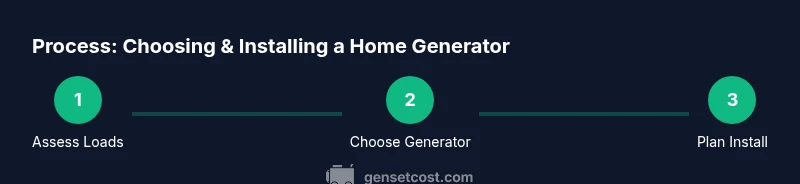
Start by listing essential circuits (lights, refrigerator, heating, life-support equipment) and estimate their running times under outages. Use a simple worksheet to classify loads as essential, non-essential, or intermittent. Add a safety margin for surge loads and future needs. If you live in a climate with extreme temperatures, factor in heating or cooling requirements. Your objective is a generator that can handle the essential loads without unnecessary oversizing, which wastes money and increases standby running costs. Consider how often outages occur in your area and how quickly you need power restored after an outage. A well-defined load plan makes it easier to compare standby vs portable units and to choose the right fuel type.
Step 2: Pick generator type and fuel strategy
Standby generators connect to your home automatically and run on natural gas or propane, offering seamless power during outages. Portable generators are less expensive upfront but require manual operation and more space and fuel handling. Fuel choices shape reliability and emissions: natural gas provides continuous supply in many urban areas, propane is stored on-site, and diesel offers durability for larger loads but requires higher maintenance. Evaluate maintenance intervals, available fuel supply, and the practicality of running cords for critical appliances. Your goal is to strike a balance between automatic reliability, fuel availability, and ongoing costs.
Step 3: Size correctly with a safety margin
Oversizing wastes money; undersizing leaves you in the dark. Use a detailed load calculation to identify the largest anticipated load, then add a safety buffer (often 20-25%) to accommodate startup surges and future needs. Manufacturers’ sizing charts can guide you, but local codes and transfer-switch compatibility matter most for safety. A properly sized unit minimizes voltage dips and reduces strain on both the generator and home wiring. If you’re unsure, consult a qualified installer who can perform an in-depth load analysis and provide a recommended size range.
Step 4: Consider installation, permits, and transfer switches
Professional installation is essential for safety and code compliance. A licensed electrician will determine where to place the generator, run electrical connections, and install a transfer switch that isolates the generator from the grid when running. Permits are common in many jurisdictions and may take several weeks. Some installers offer turnkey services, handling permit applications and coordination with utility services. This step protects you from backfeed risks and ensures the system meets NFPA 70 (National Electrical Code) standards and local regulations.
Step 5: Budget, quotes, and total ownership costs
When estimating total ownership costs, separate upfront purchase price from installation, transfer-switch, and permitting fees. Don’t forget annual maintenance, fuel costs, and potential warranty extensions. Compare multiple quotes and request a written Scope of Work, warranty terms, and expected service intervals. Consider long-term running costs associated with different fuel types and the generator’s efficiency under partial load. Genset Cost recommends viewing total cost of ownership rather than focusing solely on upfront price to avoid surprises later.
Step 6: Verify warranties, maintenance, and reliability plans
Reliable operation requires regular maintenance and timely service. Confirm manufacturer warranties and what they cover, including weather sealing, electronics, and transfer switch components. Ask about routine maintenance windows, recommended service intervals, and the availability of local technicians. A reputable installer will provide a maintenance schedule and a clear path for parts replacement over the unit’s life. Documentation and a post-installation test are essential to ensure the system performs as expected when the power goes out.
Step 7: Authority sources and information verification
Rely on established safety and industry guidelines when planning an installation. The National Fire Protection Association (NFPA) offers guidelines for standby generators and safe operation. The U.S. Department of Energy provides consumer-oriented information on standby power considerations and energy efficiency. OSHA resources cover general electrical safety in DIY contexts and professional installations. These sources help you evaluate claims from installers and manufacturers and support a confident, code-compliant decision.
Step 8: Next steps and getting started
With your load chart, generator type, and budget clarified, request written quotes from multiple installers and verify their credentials. Schedule a consult to review site-specific requirements, permits, and a projected installation timeline. Remember to set a realistic start date and a contingency plan for weather or permit delays. This approach keeps you focused on practical outcomes and protects against common pitfalls in generator acquisition and installation.
Authority sources and how to verify information
- NFPA official guidelines: https://www.nfpa.org
- U.S. Department of Energy standby generators information: https://www.energy.gov/eere/buildings/articles/standby-generators
- OSHA electrical safety resources: https://www.osha.gov
Tools & Materials
- Power load calculator or worksheet(Used to determine essential vs non-essential circuits and surge needs)
- Access to main electrical panel or service data(Needed to plan transfer switch and safe connection)
- Measuring tape and clipboard(For space planning and documenting layout)
- Safety gear (gloves, safety glasses)(For safe handling of equipment and wiring)
- Licensed electrician or installer for transfer switch installation(Needed to meet code and ensure safe connection)
- Fuel type information (natural gas, propane, diesel)(Helpful for comparing running costs and availability)
- Permit applications and local codes checklist(Often handled by installer; verify requirements)
Steps
Estimated time: 2-6 weeks
- 1
Assess power needs and reliability goals
List essential circuits (lighting, refrigeration, HVAC, medical devices) and estimate outage duration. Create a simple worksheet to categorize loads as essential, non-essential, or intermittent. Identify minimum acceptable runtime for critical circuits and consider climate-driven loads. A precise load map prevents overbuying and underprovisioning.
Tip: Start with essential circuits and leave room for future growth. - 2
Select generator type and fuel strategy
Choose between standby (automatic) and portable units, and decide on fuel—natural gas, propane, or diesel. Evaluate reliability, fuel availability, space, noise, and maintenance. Fuel choice affects installation and long-term operating costs; align with your home’s fuel infrastructure.
Tip: If you want automatic restoration within seconds, a standby unit is usually best. - 3
Size correctly with margins
Compute the largest anticipated load, then add a safety margin to cover startup surges and growth. Use manufacturer sizing charts as a baseline but confirm with a certified installer who can tailor the size to your wiring and panel. Proper sizing minimizes nuisance tripping and ensures a smooth transfer.
Tip: Aim for a 20-25% margin over your calculated peak load. - 4
Plan installation, permits, and transfer switches
Engage a licensed electrician to design a safe installation path, install a transfer switch, and ensure all wiring complies with local codes. Request permit handling from the installer and confirm whether an inspection is required after completion.
Tip: Never skip a transfer switch; it prevents backfeeding and protects both utility workers and your home. - 5
Obtain quotes and assess total cost
Get at least three written quotes that break down equipment, installation, permit fees, and warranties. Compare total cost of ownership, not just upfront price. Check for hidden costs and review warranty terms for both the generator and transfer switch.
Tip: Ask for a detailed Scope of Work and a post-install torque and safety test plan. - 6
Test, start-up, and maintenance plan
After installation, perform a full system test, including load testing, sequence checks, and auto-start verification. Establish a maintenance schedule with your installer and keep records of service dates, filter changes, and battery health.
Tip: Schedule annual professional maintenance to extend life and reliability.
People Also Ask
Do I need a permit to install a home standby generator?
Most jurisdictions require a permit for standby-generator installations and transfer switches. A licensed installer can handle permit applications and ensure compliance with local codes and NFPA standards.
Most areas require a permit; a licensed installer can manage the paperwork and ensure code compliance.
What is the difference between standby and portable generators for home use?
Standby generators are permanently installed and automatically start during an outage, offering seamless power. Portable units are mobile and require manual setup but can be cheaper upfront. Consider reliability, convenience, and space when deciding.
Standby is automatic and permanent; portable is cheaper but needs manual setup.
Is a transfer switch required for a safe installation?
Yes. A transfer switch safely isolates the generator from the grid and prevents backfeeding. It’s essential for safety and is typically required by code.
A transfer switch is essential for safety and code compliance.
How long does installation typically take?
Installation duration varies by site and permit timelines but can range from a few days to several weeks once the permit is approved. A licensed installer can provide a precise schedule.
It usually takes a few days to weeks, depending on permits and site complexity.
Watch Video
Key Takeaways
- Assess essential vs non-essential loads before buying
- Choose standby for automatic power restoration when possible
- Size with a prudent safety margin to cover surges
- Plan permits and transfer switch installation with a licensed pro
- Prioritize total cost of ownership over upfront price
- Schedule testing and ongoing maintenance from day one