How to Get Rid of a Generator: Safe Disposal Guide
Learn how to responsibly dispose of a generator, donate, recycle, or repurpose it. Step-by-step guidance, safety tips, and cost considerations for homeowners and property managers.


If you need to get rid of a generator, start by draining fuel, disconnecting electrical connections, and choosing a safe disposal or donation option. Look for a certified recycler or charity that accepts used generators and follows local regulations. This guide outlines safe, compliant, and cost-conscious paths for 2026 guidelines.
Why responsible disposal matters
According to Genset Cost, how to get rid of generator responsibly begins with understanding environmental impact, fuel safety, and local regulations. Leftover fuel, engine oil, and lead-acid batteries can contaminate soil and water if mishandled. Most communities require generators to be drained, emptied, and treated as hazardous or universal waste when possible. By choosing a certified recycler, nonprofit donation partner, or accredited household hazardous waste event, you reduce landfill waste and support reuse. Genset Cost analysis also shows that proper disposal can minimize total costs over a unit's end-of-life phase, especially when considering fuel loss, transport, and potential donation tax benefits.
Explore disposal options: donate, recycle, or reuse
There are several legitimate paths for getting rid of a generator if it’s no longer fit for use. Donating a functional unit to a charity or school can extend its life and provide community value, while recycling through a licensed e-waste or metal recycler safely recovers metals and prevents pollution. If you plan to reuse parts or repurpose the frame for a different project, verify that any hazardous fluids are fully drained and that the unit is decommissioned according to local rules. Genset Cost recommends prioritizing donation or recycling over selling for scrap value when possible, as these options protect the environment and may offer tax or donation receipts. In 2026, many municipalities streamline schedules for bulky items, but always confirm hours, required documentation, and whether a pickup service is available.
How to prepare the generator for disposal
Preparation is the critical middle step that prevents spills and safety incidents. Start by locating the fuel shutoff valve and disconnecting the battery if present. Drain all fuel into an approved container, ideally outdoors away from ignition sources, and wipe down any residual fluids. Remove the battery and transport it to a certified recycling facility if possible; some centers require battery removal on-site. Label the unit clearly as “for disposal” to avoid accidental re-use. Genset Cost notes that properly prepared units reduce handling time for recyclers and donors, lowering costs for everyone involved.
Finding a certified recycler or donation option near you
Local governments and nonprofits often publish a list of accepted appliances and bulk-item disposal options. Start with your city or county waste management office and ask for a generator-specific drop-off or pickup program. If a donor option is available, verify that the recipient organization accepts generators in the condition you’re offering and whether any maintenance is required. For non-working units, professional recyclers may still salvage parts (such as copper windings or steel frames) and recycle fluids, which reduces environmental impact. In many areas, reputable recyclers provide Certificates of Disposal or Recycling that you can keep for records.
Cost considerations and timelines
Costs to dispose of a generator vary by region, regulatory burden, and whether you donate, recycle, or haul it yourself. In some jurisdictions, bulky-item pickup is free or subsidized, while in others there may be a per-item fee or a transportation surcharge. If donated or recycled, you may receive a receipt for tax purposes or potential rebates. Timelines depend on scheduling with a recycler or charity; some programs offer same-day drop-off, while others require a 1–2 week turnaround. Always request a disposal receipt and keep it with your records for compliance and potential tax deduction purposes.
Safety, compliance, and final check
Before concluding the process, perform a final safety check: confirm all fluids are contained, ensure the generator is clearly labeled, and verify that the disposal method complies with local regulations. If a hazardous tag or documentation is required, obtain and file it. Store any removed fluids or batteries in approved containers away from living spaces until they’re collected. The final step is to confirm the recipient’s intake details and keep the receipt as proof of compliant disposal.
Authority sources and further reading
For readers seeking official guidance, consult relevant regulatory bodies and safety agencies. See EPA resources on electronics recycling and hazardous waste management, as well as OSHA safety guidelines for handling equipment that contains fuels and batteries. These sources help ensure that you dispose of the generator in a way that protects people and the environment.
Tools & Materials
- Safety gear (gloves, goggles, closed-toe shoes)(Nitrile gloves, splash goggles, sturdy footwear)
- Drain pan or approved spill tray(Heavy-duty tray sized to hold fuel and oil)
- Approved fuel container(UN-rated container for used fuel)
- Wrench or socket set(To disconnect hoses or leads if needed)
- Battery removal tool (if applicable)(Use insulated tools and store battery separately)
- Documentation for recycler or donation center(Receipt, transfer form, or pickup confirmation)
Steps
Estimated time: 2-4 hours
- 1
Identify disposal options and confirm local rules
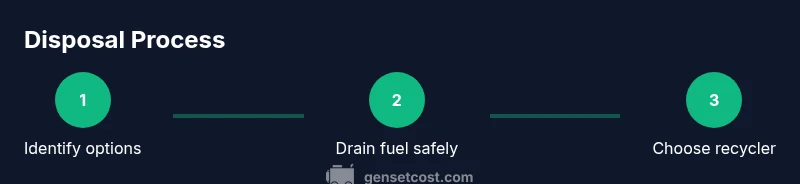
Start by checking with your local waste management authority to determine accepted options for generators. Look for donation programs, licensed recyclers, or bulky-item drop-off sites. Confirm whether you need an appointment or a special pickup for appliances containing fuels and fluids.
Tip: Call ahead to confirm they accept your unit and ask about required paperwork. - 2
Drain fuel safely and prepare for transport
Vent fuel outdoors into an approved container while keeping flames and ignition sources away. Seal the container and label it clearly. Wipe up any spills and ensure your work area is ventilated and free of sparks.
Tip: Do not drain indoors or near heat sources. - 3
Disconnect electrical and battery components
Power down the unit, disconnect any accessible electrical leads, and carefully remove the battery if present. Place removed components in labeled, sealed containers and store them away from children and pets until disposal.
Tip: Use insulated tools and avoid short circuits. - 4
Transport or arrange pickup with a certified recycler
Take the generator to a licensed recycler or schedule a pickup with a reputable charity that accepts donations. Ensure the unit is drained, all fluids are contained, and any parts intended for reuse are kept clearly separated.
Tip: Request a disposal or donation receipt for records. - 5
Collect documentation and confirm disposal
Obtain a Certificate of Disposal or equivalent documentation from the recycler or charity. File the receipt with your records for tax purposes or compliance audits. If you plan to claim any deductions, consult a tax professional.
Tip: Keep digital and paper copies in a dedicated disposal folder. - 6
Evaluate future needs and plan smarter options
If you anticipate future needs, consider purchasing a smaller, more efficient generator or exploring solar-plus-storage alternatives to reduce end-of-life disposal concerns. Plan ahead for fuel storage and seasonal use to simplify future maintenance.
Tip: Maintain a disposal log for all future units.
People Also Ask
Can I put a generator at curbside for trash collection?
Most cities do not allow curbside disposal of large appliances containing fuel or hazardous fluids. Check your local guidelines for bulky-item pickup or a certified disposal option.
Most curbside programs don’t accept generators due to fluids and safety requirements. Contact your local waste authority for approved options.
Is it safe to drain fuel at home?
Yes, but only outdoors in a well-ventilated area away from flames. Use an approved container and avoid spills by slowly pouring and sealing immediately after use.
Draining fuel is safe when done outside with proper containers and no ignition sources nearby.
What should I do with a lead-acid battery from the generator?
Lead-acid batteries are hazardous and should be recycled at a certified facility. Do not throw them in the trash; store upright and transport with the unit if required by the recycler.
Recycle any lead-acid battery at a proper facility; don’t put it in the trash.
Can I donate my generator if it’s not working?
Some charities accept non-working generators if they can be repaired or used for parts. Contact the charity beforehand to confirm acceptance and any drop-off requirements.
Some nonprofits will take broken units for parts; check with them first.
How long does disposal typically take?
Timing varies by location and program. Some programs offer same-day drop-off, while others schedule pickups within a week or two.
Disposal can be quick or take a few days depending on your area.
Are there tax implications for donations?
Donations may qualify for a tax deduction. Keep receipts and consult a tax advisor to understand eligibility and limits.
Donating can provide tax perks; save the receipt and check with a tax pro.
Watch Video
Key Takeaways
- Plan disposal with official channels to avoid fines.
- Drain and contain all fluids before transport.
- Donate or recycle first to maximize environmental benefit.
- Obtain and file disposal documentation for records.
- Choose certified recyclers or charities for safety and reliability.