How to Use a Home Generator: A Complete Step-by-Step Guide
Learn how to safely size, install, operate, and maintain a home generator with practical steps, safety tips, and maintenance guidance from Genset Cost. This educational guide helps homeowners and property managers prepare for outages, optimize reliability, and plan for cost-effective backup power.


Learn how to safely use a home generator, size for your needs, and operate it during outages. You’ll plan for transfer-switch compatibility, fuel type, and a basic load assessment to prevent overload. This guide emphasizes safety, maintenance, and practical, step-by-step actions.
Safe Foundations for Home Generator Use
Before you operate or install a home generator, establish a safety baseline that protects your family and your property. According to Genset Cost, the safest path starts with understanding local electrical codes, securing any necessary permits, and choosing a unit that matches your home’s needs. Install the unit outdoors in a well-ventilated area with ample clearance on all sides, away from doors, windows, and air intakes. Equip the space with carbon monoxide detectors in living areas and a functioning smoke alarm system. If you plan to connect a generator to your home’s wiring, hire a licensed electrician and use equipment that complies with national electrical standards. Never run a generator indoors, in a garage, or in a crawl space, even with doors open—exhaust poses a serious health risk. Keep fuel stored safely in approved containers and stored away from heat sources. Create a simple emergency plan that includes how you will start the unit, who will monitor it, and how you will operate essential circuits first. Finally, document the location, the transfer switch type, and the nearest power sources for quick reference during an outage. Laying this groundwork now reduces risk and saves time when outages occur.
Sizing Your Generator for Home Power Needs
Sizing determines whether you will power essential operations only or maintain a broader set of appliances during a outage. Based on Genset Cost research, start with a thorough load calculation that lists every major device (refrigerator, heating system, water heater, sump pump, lighting, outlets) and notes their wattage. Add startup surges for motors and compressors, not just running watts. Group loads into essential versus nonessential to decide whether you need a compact portable unit or a larger standby system. When in doubt, design with a buffer so you can handle startup spikes and future expansions without overloading the circuit. In practice, many homeowners aim for a size that covers core needs such as refrigeration, HVAC (or a heat source in winter), lights, and communications. If you plan to feed a whole house, you will need a higher-capacity system and a professionally designed transfer-switch arrangement. If you only want backup for critical devices, a smaller, portable setup may be sufficient. Remember to factor in fuel supply, runtime expectations, and the ease of refueling during outages.
Choosing Between Portable, Standby, and Hybrid Generators
There are clear tradeoffs among portable, standby, and hybrid generator configurations. Portable generators are inexpensive upfront and flexible for short outages or odd jobs but require manual setup, fuel management, and regular refueling. Standby generators are permanently installed and automatically switch on during outages, offering convenience and reliability but with higher upfront costs and professional installation needs. Hybrid options blend features and may leverage dual-fuel capabilities to improve fuel availability. Consider access to fuel during an outage, space for installation, noise tolerance, and local codes. If you prioritize seamless transition and minimal user intervention, a standby or hybrid system with a properly installed transfer switch is often worth the investment. If you value cost control and portability for occasional use, a smaller portable generator can meet essential needs with careful load management. In all cases, ensure compatibility with your home’s electrical panel and appoint a qualified technician to design the transfer-switch integration and safety measures.
Install, Connect, and Verify: Key Safety Considerations
Installing or connecting a generator requires attention to electrical safety and proper documentation. Work with a licensed electrician to plan the connection to your main panel through an automatic or manual transfer switch. Verify that you have clearances, weatherproof enclosures, and outdoor-rated cords if you are using a portable model. Ensure that fuel storage adheres to safety guidelines: use approved containers, keep fuel away from ignition sources, and store in a cool, ventilated area. After installation, perform a commissioning test with the utility company’s permission if required and verify that the generator transfers power correctly without backfeeding into the distribution lines. Use a CO detector and a dedicated outlet or transfer switch setup to prevent backflow into home circuits. Finally, review manufacturer start-up and shut-down procedures and keep a written log of test cycles, maintenance, and any alarms.
Operating Protocols During Outages
During an outage, start the generator according to the manufacturer’s instructions, and then allow it to stabilize before applying loads. Begin with essential circuits and progressively connect nonessential devices only if there is headroom for startup surges. Monitor voltage and frequency, and watch for nuisance tripping of circuit breakers. Avoid running multiple high-draw appliances at once, which can overwhelm the transfer switch and the electrical panel. If you use a transfer switch, ensure it isolates the standby supply from the utility feed to prevent backfeeding. Keep the unit dry and ventilated, and never touch hot surfaces. Maintain a log of run times, fuel levels, and maintenance events to inform future outages and scheduling.
Maintenance, Safety Checks, and Common Pitfalls
Regular maintenance is essential for reliability and safety. Schedule periodic inspections of the ignition system, battery (for automated units), spark plugs, and air filters. Test CO detectors regularly and replace batteries as needed. Inspect fuel lines for leaks, ensure proper venting, and keep the area free of debris and moisture. Pitfalls to avoid include running a generator indoors, attempting to refuel while it is hot, and bypassing the transfer switch to backfeed the panel. Also, avoid oversized loads without proper sequencing, which can trigger the transfer switch prematurely or cause generator stall. Document periodic maintenance, service visits, and any abnormal readings in a log to simplify troubleshooting and warranty claims.
Cost considerations and financing options
Cost consideration is an essential planning step; however, prices can vary widely based on size, installation complexity, and local rates. From a budgeting perspective, homeowners should consider the sticker price of the unit, the cost of a transfer switch, and potential installation labor. Financing options, grants, or utility programs may be available depending on your location and the system you choose. Rather than chasing the lowest upfront price, evaluate long-term reliability, warranty terms, fuel type availability, and service networks. The Genset Cost team recommends collecting quotes from multiple installers, asking for a detailed scope of work, and requesting a transfer-switch compatibility statement to avoid surprises later. Keep in mind that ongoing fuel costs and maintenance influence total cost of ownership over the system’s lifetime.
Quick-start checklist and sample outage scenario
In this final section, you’ll find a practical checklist to get started and a simple outage scenario to illustrate the process. Checklist items include verifying space, securing permits, selecting a transfer switch, obtaining fuel, and planning a basic maintenance calendar. Outage scenario: a winter power loss triggers a generator startup, the load is stepped up gradually, and the system is monitored for stability. This approach minimizes overload and keeps essential services online while you troubleshoot. By following the steps outlined here, homeowners can achieve a safer and more reliable backup power setup. The Genset Cost team emphasizes planning ahead and validating your configuration with a professional before regular use.
Tools & Materials
- Generator unit (portable or standby)(Choose size to match your load calculation and ensure compatibility with the transfer switch.)
- Automatic or manual transfer switch(Select an ATS with amperage rating matching your main panel and local codes.)
- Fuel supply (propane, natural gas, or gasoline) and approved storage(Follow local safety guidelines for storage; keep away from ignition sources.)
- Outdoor mounting pad or stable base(Ensure level, non-flammable surface with drainage.)
- Outdoor-rated cords and adapters(Use weatherproof, heavy-gauge cords for portable models.)
- CO detectors and smoke alarms(Place in sleeping and living areas; test regularly.)
Steps
Estimated time: 4-6 hours for initial setup and testing.
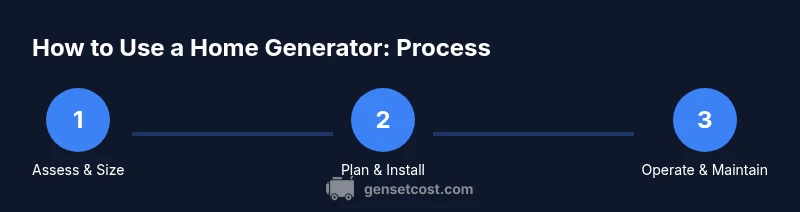
- 1
Assess power needs and select the right generator
Begin with a documented list of essential loads and a rough budget; determine whether you need portable or standby. Use a simple calculator to estimate running watts and startup surges, and identify any future expansion. This groundwork ensures you select a unit with enough capacity and an appropriate transfer-switch configuration.
Tip: Create a prioritized list of essential circuits (refrigerator, lighting, heating/cooling) to guide sizing. - 2
Plan placement and ventilation
Choose an outdoor location with good airflow, away from doors, windows, and air intakes. Check local codes for setback distances and noise restrictions. Plan for a weatherproof enclosure or pad and ensure you can safely access the unit for maintenance.
Tip: Keep at least 3-5 feet of clearance on all sides to reduce heat buildup and allow service access. - 3
Install transfer switch and wiring with a professional
Have a licensed electrician install the transfer switch to connect the generator to your main panel. The installer should confirm compatibility with your panel and utility rules, and perform a safe, code-compliant interlock or transfer method. Do not attempt to backfeed the utility lines yourself.
Tip: Ask for a written schematic showing where the generator feeds critical circuits and how the panel isolates from the grid. - 4
Connect fuel supply and storage safely
Attach the chosen fuel source (propane, natural gas, or gasoline) following the manufacturer’s instructions. Store fuels in approved containers away from heat sources and ensure local regulations are followed. Verify fuel lines and fittings for leaks before initial operation.
Tip: Never store fuel inside living spaces or near combustible materials. - 5
Test start-up and verify loads
Power up the unit and allow it to stabilize before engaging essential circuits. Verify that the transfer switch isolates from the grid and that voltage and frequency are within safe ranges. Run through a basic scenario (e.g., lights on, a fridge cycling) to confirm stable operation.
Tip: Perform a full-load test only after the system is configured and code-compliant. - 6
Create a maintenance and outage plan
Document regular maintenance tasks (air filters, spark plugs, battery checks, CO detector tests) and set reminders for inspections. Establish a simple outage protocol with fade-in/ fade-out sequencing to protect appliances and prevent overloads.
Tip: Keep a log of run times, fuel levels, and any alarms for troubleshooting.
People Also Ask
What is a transfer switch and why do I need one?
A transfer switch isolates the home from the utility line and directs power from the generator only to selected circuits. It prevents backfeeding, which can endanger utility workers and equipment. A properly sized transfer switch is essential for safe, reliable operation.
A transfer switch keeps your generator’s power from feeding back into the grid, protecting people and equipment. It’s a crucial safety feature for any home backup system.
Can I run a home on a portable generator?
Yes, for brief outages or essential loads, a portable generator can work with careful load management and a compatible transfer switch. It requires manual setup and regular fueling. For continuous outages or whole-house needs, a standby system may be a better fit.
A portable generator can cover essentials, but you’ll manage fuels, setup, and load carefully.
Is it safe to refuel while the generator is running?
Refueling while the unit is hot is dangerous and can ignite fuel vapors. Always turn off the generator and wait for it to cool before refueling. Keep fuels stored safely away from living spaces and ignition sources.
Never refuel while the generator is running or hot. Wait for it to cool first.
Do I need permits or inspections for a home generator installation?
Local codes often require permits for installation and transfer-switch work, and inspections may be scheduled after installation. A licensed electrician can help ensure compliance and keep records for warranty and safety.
Yes, check local rules; a licensed professional can handle permits and ensure compliance.
How often should I service a home generator?
Regular preventive maintenance, typically at least annually or per manufacturer recommendations, helps prevent failures during outages. This includes fuel, oil, battery, and spark plug checks, plus system tests.
Service at least once a year and after heavy use; follow your owner’s manual.
Watch Video
Key Takeaways
- Size your generator to cover essential loads first.
- Use a transfer switch and professional installation.
- Operate outdoors with proper ventilation and CO detectors.
- Test and log maintenance, startup, and outages.
- Plan for future load growth to avoid premature upgrades.