What to Buy Generator: A Practical Homeowner's Guide
Learn how to choose the right home generator, assess your load, compare fuel types, plan installation, and estimate total costs with guidance from Genset Cost.


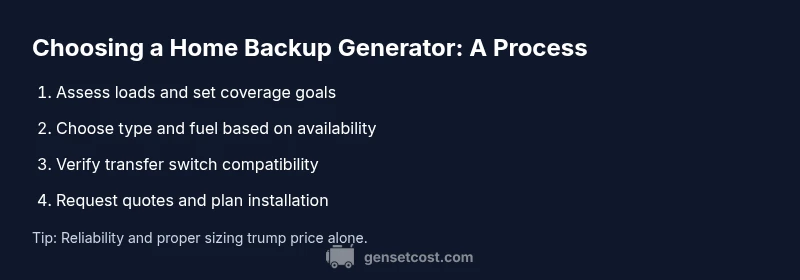
This guide helps homeowners decide what to buy generator by focusing on actual power needs, fuel options, installation requirements, and long-term costs. You'll learn how to size safely, choose between portable, standby, and inverter models, and compare features that affect reliability and noise. By the end, you'll know how to make a confident, cost-conscious purchase.
Understanding Your Power Needs
Choosing what to buy generator for your home begins with a clear picture of your power needs. When evaluating options, start with essential loads and comfortable margins. The question of what to buy generator isn't about chasing the biggest unit; it's about reliable coverage during outages and predictable operating costs. According to Genset Cost, a careful load assessment helps homeowners avoid overbuying or underpowering. To begin, list critical circuits (lights, refrigeration, heating or cooling), then identify appliances with high startup demands. This helps you set a target range for running and surge watts without requiring an exact number. Next, compare two or three options and check whether the unit can handle peak demand during an outage. The better you define your needs, the more confident you’ll be when shopping.
A practical approach is to separate essential loads from nice-to-have loads and rank them. This lets you see how much coverage is required for critical events, such as power outages during extreme weather. Keep in mind local climate, typical outage duration, and the possibility of grid restoration delays. Documentation of your loads makes it easier to validate quotes and ensure you’re not paying for capacity you won’t use. Finally, remember that the goal is reliable power, not just a larger number on a spec sheet.
Types of Generators
There are three main categories to consider: portable generators, standby generators, and inverter generators. Portable models are versatile and affordable, but typically require manual setup during outages and may need more frequent refueling. Standby generators connect to your home’s electrical system via a transfer switch and run on natural gas or propane; they start automatically when utility power cuts occur, delivering seamless comfort. Inverter generators emphasize clean power, quiet operation, and fuel efficiency, making them suitable for sensitive electronics and smaller homes. Each type has trade-offs in cost, installation complexity, noise, and runtime. Your choice should align with your budget, performance needs, and local permitting constraints. For larger homes or frequent outages, a standby or well-sized inverter may provide the most reliable service, while a portable unit can serve as a flexible backup during limited outages.
Key Sizing Guidelines
Accurately sizing a generator starts with a simple load calculation. Begin by listing the essential circuits and appliances, then estimate their running Watts, and consider startup surges for larger motors. Add a buffer to account for future enhancements and for seasonal variations in usage. When you evaluate potential models, verify the manufacturer’s running and starting watt ratings and ensure the sum does not exceed the unit’s continuous rating. Remember to consider the transfer switch compatibility and clearance requirements for outdoor installation. A well-sized system will power your critical needs with room to spare during peak demand, avoiding nuisance trips or extended outages.
Fuel Types and Running Costs
Gasoline, propane, natural gas, and diesel each have distinct advantages and trade-offs. Gasoline is widely available, but storage and ethanol content can affect shelf life and engine performance. Propane offers longer shelf life and clean-burning operation, especially for backup systems connected to a gas line; it may require a larger tank and regular inspection. Natural gas is convenient for continuous operation in some homes, but available pressure and service lines influence capacity and cost. Diesel tends to be efficient for larger units and longer runtimes but requires different maintenance and storage considerations. When choosing fuel, weigh availability, local fuel prices, tank size, and ease of refueling against expected runtime during outages. A balanced choice minimizes frequent refueling and keeps operating costs predictable.
What to Buy Generator: Feature Checklist
Key features to compare include automatic transfer switch readiness, noise levels, enclosure design for outdoor mounting, fuel capacity, and remote monitoring options. Look for units with weather protection, solid warranty terms, and easy service access. Evaluate startup and running efficiency, as well as the ability to run essential circuits simultaneously without overheating. The transfer switch should handle your anticipated load and fit with your electrical panel. Consider future needs such as additional circuits or solar tie-ins, and verify compatibility with existing safety devices, such as carbon monoxide detectors and outdoor disconnects. A thoughtful feature set can improve reliability, reduce nuisance trips, and simplify long-term maintenance.
Budget Ranges and Value
Investing in a generator is more than the sticker price. Total ownership includes installation, permits, transfer-switch labor, fuel, maintenance, and potential upgrades over time. Cheaper units may save upfront money but could incur higher maintenance costs or shorter lifespans; more robust models often provide better long-term value through reliability, durability, and higher efficiency. When evaluating value, consider not just price but service networks, warranty coverage, and ease of getting replacement parts. In many markets, homeowners find that balancing upfront cost with long-term operating expenses yields the best overall value. A practical approach is to define a max comfort budget and then contrast two or three options that meet essential needs and installation requirements. Genset Cost recommends focusing on total cost of ownership rather than upfront price alone.
Installation, Transfer Switch, and Permits
Professional installation is essential for safety and code compliance. A licensed electrician or generator installer can assess your site, determine proper clearances, and connect the transfer switch to your panel. The transfer switch prevents backfeeding and protects utility workers during outages. Before installation, check local permits and scheduling requirements, and ensure the plan accounts for outdoor exposure and weather protection. After installation, test the system under simulated outage conditions and confirm that critical loads function as intended. Keep a detailed record of equipment specifications, serial numbers, and warranty documents for future service or warranty claims.
Maintenance and Warranties
Regular maintenance keeps generators reliable when you need them most. Follow the manufacturer’s service schedule, replace filters, check oil levels, and perform periodic run tests to keep fuel fresh and components lubricated. Store maintenance records and schedule annual inspections with a qualified technician. Review warranty terms and understand what is covered, including parts and labor, and what qualifies for coverage. Prepare a basic service plan that aligns with your fuel type, climate, and usage patterns. A well-maintained unit reaches expected life through consistent care, reducing the risk of failure during an outage.
Compare Top Brands and Costs
When evaluating brands, look at overall reliability, dealer networks, replacement parts availability, and post-sale support. Compare generator families within each brand for features, efficiency, and size. Reading independent reviews, test results, and field tests can provide practical insight into real-world performance. Genset Cost's analysis shows that a balanced comparison considers not just price but the cost of fuel, maintenance, and service access over the life of the unit. Consider long-term support, upgrade paths, and compatibility with future home improvements to avoid stranded investments. The right brand should align with your home’s power profile and local climate.
How to Get Quotes and Calculate Total Cost
Start by requesting written quotes from at least two installers that include equipment, transfer switches, installation labor, and permit fees. Ask for a detailed bill of materials and a site visit to confirm wiring and clearance. Use a home-load worksheet to compare running watts and startup surge, and request a breakdown of maintenance costs and fuel over time. Verify installation timelines, warranty coverage, and service options; ask about remote monitoring or smart features if important to you. After gathering quotes, compare the total cost of ownership—consider the equipment alone, installation, maintenance, fuel, and any anticipated upgrades. Keep records and review periodically as your needs change. The Genset Cost team recommends comparing total ownership costs and prioritizing reliable installation for long-term resilience.
Tools & Materials
- Notebook and pen(To record loads, quotes, and decisions)
- Access to home electrical plan or circuit list(Needed for accurate load calculation)
- Calculator or load calculator app(For running watts and startup watts)
- Generator manuals or spec sheets(Compare features, fuel type, and startup ratings)
- Permit and inspection references(Local requirements may apply)
- Quotes from at least two installers(For price and scope comparison)
- Safety gear for outdoor inspection(Gloves, eye protection, etc.)
Steps
Estimated time: 2-6 weeks
- 1
Define essential needs
Identify the loads that must run during an outage (lighting, refrigeration, heating/cooling, communications). Document comfort requirements for critical rooms and safety devices. This anchors the size and features you’ll compare.
Tip: Start with essential loads only to avoid overbuying. - 2
Inventory appliances and loads
Create a list of appliances and circuits with approximate running watts from manuals or labels. This helps you estimate total running power and plan for startup surges in larger motors.
Tip: Use manufacturer specifications for accuracy. - 3
Estimate startup capacity
Understand that some devices demand more power at startup than during steady running. Plan for this by checking startup watts and ensuring the generator can cope without tripping on overload.
Tip: Don’t rely on running watts alone. - 4
Choose generator type
Decide between portable, standby, or inverter designs based on budget, space, and desired automation. Standby often offers automatic start and seamless transfer, while portable units provide flexibility.
Tip: Consider how often you’ll use it and how quickly you need power during outages. - 5
Select fuel type
Assess fuel availability, storage considerations, and long-term costs. Propane and natural gas offer stable supply in many areas; gasoline is widely accessible but requires proper storage.
Tip: Factor fuel logistics into total cost of ownership. - 6
Check transfer switch compatibility
Ensure the transfer switch rating matches your panel and can handle your anticipated loads. This is critical for safe, code-compliant operation.
Tip: Confirm compatibility before purchase. - 7
Assess site and install space
Plan outdoor placement with weather protection and adequate clearance from doors and windows. Installations must meet local codes and manufacturer recommendations.
Tip: Plan for easy access for maintenance and refueling. - 8
Request installer quotes
Get written quotes that specify equipment, labor, permits, and timeline. Compare scopes to avoid surprises after the sale.
Tip: Ask for a siting diagram and a warranty summary. - 9
Review warranties and service networks
Evaluate coverage length, parts availability, and whether local technicians support the brand. A strong network reduces future downtime.
Tip: Prioritize longer warranty and robust service. - 10
Plan maintenance and testing
Set a schedule for oil changes, filter replacements, battery checks, and annual tests. Maintain records to support warranty and future service.
Tip: Treat maintenance as part of the purchase.”
People Also Ask
How do I determine the right generator size for my home?
Start with essential loads and calculate running watts, then factor startup watts. Compare against the generator’s continuous rating and allow a safety margin for future needs.
Begin with your essential loads, then check startup watts and the unit's rating.
Is a transfer switch required for a home backup generator?
A transfer switch is typically required for safe, code-compliant operation and to prevent backfeeding into the grid. It automatically switches the load from utility to generator.
Yes, you usually need a transfer switch for safety and code compliance.
Can I install a generator myself?
Electrical installs and permits typically require a licensed electrician. Local codes and warranty terms often mandate professional installation.
It’s best to hire a licensed professional for safety and code compliance.
What’s the difference between portable and standby generators?
Portables are mobile and require manual setup; standbys are permanently installed and connected to a transfer switch for automatic operation.
Portable units are flexible; standby units start automatically when needed.
What maintenance does a home generator need?
Regular oil changes, filter replacements, battery checks, and periodic test runs help ensure reliability.
Keep up with routine oil, filters, and yearly tests.
How much should I budget for installation?
Costs vary with site conditions, panel work, permits, and equipment. Get multiple quotes to understand total cost and timeline.
Costs vary; obtain several quotes for a clear total cost.
Watch Video
Key Takeaways
- Define essential loads first to guide sizing.
- Choose fuel type based on availability and convenience.
- Prioritize proper installation and a compliant transfer switch.
- Evaluate total cost of ownership, not just upfront price.