Whole Home Generator Installed: Costs, Sizing, and Guidance
Comprehensive guide to the costs, sizing, installation steps, and maintenance for a whole home generator installed, with practical strategies to compare options and optimize your power resilience in 2026.


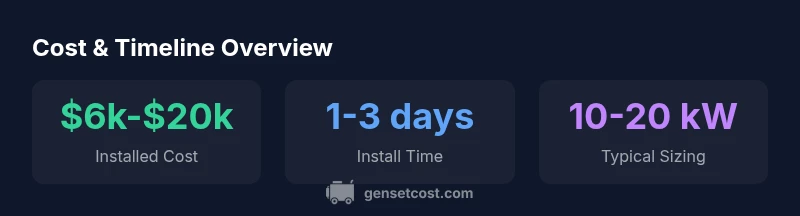
According to Genset Cost Analysis, 2026, typical installed costs for a whole home generator range from $6,000 to $20,000, depending on unit size, fuel type, and installation complexity. Transfer switches, permits, and panel upgrades can add to the total. Costs vary widely by region and contractor, so obtaining multiple quotes is essential for an accurate estimate.
Understanding the meaning of a whole home generator installed
When homeowners say a whole home generator installed, they typically mean a permanently wired standby system that automatically powers essential circuits during an outage. These systems consist of a generator unit, a transfer switch, fuel supply (natural gas, propane, or diesel), and interconnections to the home’s electrical panel. The goal is seamless, automatic operation with minimal manual intervention. For property managers, a properly installed system can dramatically reduce downtime costs, improve tenant comfort, and protect sensitive equipment. In 2026, the Genset Cost team notes that the value of resilience and uninterrupted power continues to rise in both single-family homes and multifamily properties.
Sizing your system: how to match a home’s load to a whole home generator installed
Accurate sizing is the cornerstone of reliability. The process begins with a comprehensive load calculation that accounts for essential circuits (e.g., lighting, refrigeration, heating, water heating, sump pumps) and selective high-draw appliances. A common method is a wattage-based calculation that adds peak demand and a safety margin. Many homes require a 10-20 kW unit to cover core loads, while larger estates or multi-story buildings may need more. Engineers emphasize assessing nonessential loads (like spas or pools) as optional add-ons that can influence initial cost but not reliability for critical circuits.
Fuel options and efficiency: choosing natural gas, propane, or diesel for a whole home generator installed
Fuel choice affects installation practicality, ongoing costs, and emissions. Natural gas is convenient in many urban settings because it eliminates fuel storage, but supply constraints and pressure requirements can affect performance. Propane offers a clean, store-at-home option but can incur higher fuel costs per kilowatt if burned at high loads. Diesel units are robust and durable for frequent use but require storage tanks and more complex maintenance. Efficiency varies with engine design, load factor, and maintenance, so informed comparison is essential.
Installation steps: permits, transfer switches, and wiring for a whole home generator installed
Site preparation includes confirming gas or propane supply, securing a permit, and ensuring code compliance. A transfer switch is critical for automatic operation; it detects outages and isolates the home from the grid while powering selected circuits. Electrical work usually involves upgrading the main panel or adding a sub-panel, trenching for conduit, and routing fuel lines. The timeline depends on the site, local inspections, and utility coordination. Working with a licensed installer reduces risks and ensures safe, compliant installation.
Cost breakdown: components and typical ranges for a whole home generator installed
Costs break down into generator price, transfer switch, fuel system, electrical work, permits, and labor. The generator itself often accounts for a substantial portion of the budget, but the transfer switch and electrical upgrades can add significantly. Permit fees vary by jurisdiction, and installation complexity drives labor costs. To budget effectively, request a formal quote that itemizes each component and an allowance for contingencies (typically 10-20%).
Maintenance and reliability: keeping a whole home generator installed ready for outages
Regular maintenance is essential for reliability. Expect routine inspections, oil changes (for diesel) or filter checks (for gas/propane), battery testing, and transfer switch tests at least annually. Some manufacturers require professional servicing every 12-24 months. The reliability of standby generators also hinges on exercising the unit monthly or quarterly and keeping the fuel system clean. Enroll in a maintenance plan if offered by your installer to simplify scheduling and ensure coverage.
Financing, incentives, and total cost of ownership for a whole home generator installed
Many homeowners finance the upfront cost through loans or home improvement financing, which can spread out payments and reduce immediate budget impact. Some installers offer maintenance contracts or warranty extensions that improve long-term value. While incentives vary by region, it’s wise to explore local utility programs or manufacturer promotions to optimize total ownership costs. A clear total-cost-of-ownership view helps justify the investment against outage costs and increased property value.
How to get accurate quotes and choose a contractor for a whole home generator installed
Begin with multiple on-site evaluations to understand site-specific constraints and required permits. Ask for a detailed quote that separates generator, transfer switch, electrical upgrades, fuel system, permits, and labor. Verify credentials, isolation practices, commissioning procedures, and warranty terms. Request references and verify current installations in similar homes. A well-documented quote and transparent contract reduce surprises during installation.
Real-world scenarios: budgets and timelines for a typical installation
In practice, most projects span 1-3 days on-site for a standard 10-20 kW installation, with additional time for permits and inspections. Budget ranges reflect site complexity and fuel choice. For smaller homes near utilities with easy gas access, costs may cluster toward the lower end of the range; for larger homes, remote locations, or substantial panel upgrades, the timeline and budget move toward the higher end. These scenarios illustrate why site surveys are essential before signing a contract.
Estimated cost breakdown and timeline for a whole home generator installed
| Aspect | Description | Typical Range |
|---|---|---|
| Installed cost (standby unit) | Unit price plus installation, varies by size and site | $6,000-20,000 |
| Annual maintenance | Routine service, filter/oil changes, battery checks | 150-500 |
| Transfer switch cost | Automatic switch between grid and generator | 500-2000 |
| Installation time | Site work, electrical upgrades, inspections | 1-3 days |
People Also Ask
What factors influence the total cost of a whole home generator installed?
Total cost is influenced by generator size, fuel type, installation complexity, permits, transfer switch, and labor. Site constraints and regional pricing also play a role. Getting multiple, detailed quotes helps establish a realistic budget.
Costs depend on size, fuel, and install complexity—get multiple quotes for a clear budget.
How do I determine the right size for my home?
Start with a comprehensive load calculation focusing on essential circuits and high-draw appliances. A typical home may need 10-20 kW, but accurate results require a professional assessment and consideration of future loads.
Size is based on essential loads; a professional assessment gives you the right range.
Are there incentives or financing options for a whole home generator installed?
Incentives vary by region and utility programs. Financing through loans or contractor offers can spread the cost. Check with your installer for available options and any regional programs.
There can be financing options; check with your installer for local programs.
What maintenance is required after installation?
Expect regular inspections, periodic oil or fuel system checks, battery testing, and annual transfer switch tests. Some units require professional service every 12-24 months.
Plan for annual checks and periodic servicing to stay ready.
How long does installation typically take?
Most installations take 1-3 days on-site, depending on electrical work, gas supply, and inspections. Permit processing can add days to the overall timeline.
Most installs are one to three days, plus permit time.
What is the difference between standby and portable generators for a whole home setup?
Standby generators are permanently installed and connected to the panel with an automatic transfer switch. Portable units require manual setup and external transfer switches, so they’re typically less convenient for whole-home power.
Standby is permanent and automatic; portable is movable and manual.
“A properly sized, professionally installed standby generator is a long-term investment in home resilience and outage savings.”
Key Takeaways
- Get multiple quotes to compare costs
- Size based on essential loads, not full home demand
- Plan for transfer switches and electrical panel upgrades
- Consider fuel type and maintenance needs in total cost
- Don’t forget permits and contractor warranties