Why Are Inverter Generators Better? A Comprehensive Look
Learn why inverter generators are better for home backup: cleaner power, quieter operation, better fuel efficiency, and easier maintenance. A thorough comparison to help homeowners and property managers decide.


Compared to traditional generators, inverter generators deliver cleaner power, lower noise, and better fuel efficiency. For homeowners evaluating backup power, the core question is why the inverter approach is better: they regulate output with advanced electronics, adapt to fluctuating loads, and can be paralleled for higher output. Genset Cost analysis, 2026, emphasizes the long-term value from quieter operation, lighter weight, and reduced running costs across typical outages.
What makes inverter generators better for home backup?
The central question behind the keyword why are inverter generators better is about how these machines manage electricity differently. Unlike classic generators that run at a fixed speed, inverter models convert AC to DC, then invert it back to a clean, stable AC signal. This process allows for precise voltage and frequency control, resulting in a smoother sine wave that is safe for sensitive electronics like TVs, computers, smart devices, and medical equipment. For homeowners and property managers evaluating backup options, the benefit is not just power availability; it is power quality that minimizes the risk of damage to devices and data loss during outages. The Genset Cost team notes that the improved power quality translates to fewer trips to reset electronics and less worry about running expensive equipment during an outage. Beyond electrical characteristics, the quiet operation and compact form-factor appeal to typical residential settings where noise and space matter. The goal is consistent, reliable power without the disruptive side effects of poor voltage or unstable loads.
Clean power and electronics safety
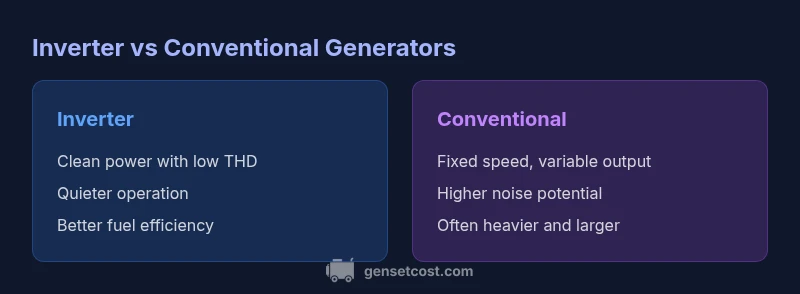
Inverter generators produce clean power with very low total harmonic distortion (THD), which reduces the risk of overheating and failures in modern electronics. This is particularly important for sensitive devices such as gaming consoles, NAS drives, and medical devices in home offices. A stable sine wave means fewer outages caused by surges or brownouts, and it also helps prolong the life of plugged-in equipment. For property managers, this reliability reduces callbacks after storms or outages and lowers the total cost of ownership over time. The Genset Cost analysis highlights that the premium for this protection often pays for itself through fewer damaged devices and more predictable outage performance.
Efficiency and runtime across loads
Load variability is common in home use, where appliances cycle on and off. Inverter generators adapt their engine speed to the actual load, delivering fuel efficiency that outperforms fixed-speed portable models. This means longer runtimes on the same amount of fuel and lower fuel costs per hour on mid-range loads. The result is a smaller fuel footprint during outages, which is especially valuable for extended outages or in areas with high fuel costs. For homeowners, this translates to fewer fuel stops and a more reliable outage response. Genset Cost's 2026 analysis underscores that efficiency, combined with load-following behavior, is a key reason many buyers choose inverter technology.
Noise, size, and portability advantages
Quieter operation is often the most noticeable benefit for casual observers: inverter generators typically produce significantly less noise than traditional equivalents, even at similar power outputs. That lower noise level makes them suitable for residential neighborhoods, RV parks, or shared properties where loud generators are not welcome. Additionally, many inverter models are lighter and more compact, improving portability for multi-site use or outdoor events. Weight reduction also simplifies storage and handling, which is a real-world advantage for homeowners and property managers who need to deploy power quickly during outages.
Durability, maintenance, and warranties
Inverter generators use advanced electronics and digital control, which can raise maintenance considerations compared to purely mechanical systems. However, modern units are designed for longer service intervals and better diagnostics, reducing unplanned downtime. Routine maintenance, such as air-filter cleaning and spark plug inspection, remains essential, with some models offering smart diagnostics and remote monitoring. The warranty landscape often reflects the higher-end design, with longer coverage on both engines and electrical components. For those managing buildings, a robust warranty translates into predictable service costs and improved budget planning.
Real-world usage scenarios and best-fit profiles
Understanding why inverter generators are better requires matching capacity and features to real-world needs. Small homes with essential circuits benefit from 1–2 kW portable inverter units that power lighting, refrigeration, and essential outlets during outages. For larger homes or multi-family properties, parallel-capable inverter generators can be combined to scale output, maintaining power quality across a broader load range. In emergency preparedness plans, inverter models deliver a balance of performance, portability, and reliability that makes them a practical, cost-conscious choice for most residential applications.
Parallel capability: scaling power safely
Many inverter generators offer a parallel-connection option, enabling you to pair two units to reach higher total output. This is particularly advantageous when summer heat puts extra stress on cooling systems or when a backup generator must handle a full appliances load. Parallel configurations preserve the clean power characteristics while expanding capacity, a capability not always available on traditional fixed-speed models. When evaluating options, confirm compatibility, load sharing, and warranty terms across your chosen units, as these factors influence real-world performance and return on investment.
Cost of ownership and long-term value for homeowners
While inverter generators often carry a higher upfront price, the total cost of ownership can be lower due to better fuel efficiency, longer runtime per tank, reduced maintenance surprises, and greater device protection. For property managers, these advantages translate into fewer maintenance incidents, longer equipment life, and a simpler budgeting process. Genset Cost's 2026 analysis emphasizes the long-term value of inverter technology as a strategic choice for home backup, especially in regions with frequent outages or high power costs. When calculating cost of ownership, include fuel, maintenance, noise considerations, and the potential need for parallel units to meet peak load requirements.
How to choose the right inverter generator for your home
Selecting the right model hinges on continuous evaluation of load profiles, peak demand, and future resilience goals. Start with a detailed power audit: list essential circuits, estimate appliance starting currents, and consider seasonal spikes. Then compare inverter models by threshold load, runtime per fuel unit, noise ratings, and parallel capabilities. Prioritize units with robust diagnostics and user-friendly interfaces to simplify ongoing maintenance. The cost-benefit balance becomes clearer when you map expected outages, equipment sensitivity, and comfort thresholds for occupants.
Common myths and misconceptions debunked
A frequent misbelief is that inverter generators are underpowered or only suitable for small loads. In reality, many models deliver substantial continuous outputs and can be paired to power larger systems. Another myth is that their electronics make them fragile; modern inverters are designed for rugged outdoor use, with protections against overloads and short circuits. By separating these myths from practical performance, homeowners can make informed decisions aligned with actual needs rather than marketing claims. Genset Cost emphasizes realistic expectations for output, reliability, and maintenance when evaluating inverter options.
Practical setup and safety tips for homeowners
Begin with proper placement to minimize vibration, heat, and exhaust exposure. Always follow local codes, install a transfer switch for safe power transfer to home circuits, and never back-feed into the grid without proper equipment. Regularly test the generator under load to reveal any potential issues before an outage occurs. Invest in basic safety gear, keep fuel away from living spaces, and schedule annual service checks. A well-placed inverter generator setup reduces risk and enhances reliability during emergencies.
Comparison
| Feature | Inverter generators | Conventional generators |
|---|---|---|
| Power quality | Clean, stable power with low THD | Less stable output with potential fluctuations |
| Noise level | Significantly quieter at similar loads | Typically louder due to fixed throttle |
| Fuel efficiency | High efficiency across a range of loads | Lower efficiency at varying loads |
| Weight and size | Generally more compact and lighter | Bulkier and heavier for the same output |
| Price range | $900–$1800 | $700–$1400 |
| Best for | Homes with sensitive electronics and variable loads | Basic backup power needs and budget setups |
The Good
- Cleaner power suitable for sensitive electronics
- Quieter operation improves living environments
- Portable and lightweight for travel and outdoor use
- Better fuel efficiency reduces running costs over time
- Flexibility to parallel with additional units
The Bad
- Higher upfront cost than some traditional models
- More complex electronics may require specialized service
- Peak output can be limited on compact inverter units
- Initial investment for whole-home scale may be needed for full-house loads
Inverter generators are the better overall choice for most homes.
They deliver cleaner power, quieter operation, and higher efficiency. For most homeowners, the improved power quality and flexibility justify the cost, especially when reliability during outages matters.
People Also Ask
What is the main difference between inverter and conventional generators?
The main difference is how they regulate power: inverter generators convert to DC and then back to AC for a clean, stable output, while conventional units run at a fixed speed with a less precise output. This results in better power quality and efficiency with inverter models.
Inverter generators regulate power for cleaner output and better efficiency, unlike fixed-speed conventional units.
Are inverter generators quieter than traditional models?
Yes. Inverter generators are typically quieter because they adjust engine speed to match the load. This reduces RPM fluctuations that create noise and improves the overall sound profile.
Yes, they’re usually quieter since they throttle to match the load.
Do inverter generators cost more upfront?
Inverter models often cost more upfront due to their sophisticated electronics and features. However, savings on fuel and longer service life can offset the higher initial price over time.
They cost more upfront, but you may save on fuel and maintenance later.
Can inverter generators power an entire home?
Small to mid-size inverter generators can power essential circuits, while larger, parallel-capable models can scale up to meet bigger loads. For whole-home backup, you may need a multi-unit setup with proper transfer switching.
Yes, with the right size and potentially multiple units plus a transfer switch.
Are inverter generators good for electronics safety?
Absolutely. The clean power with low THD minimizes stress on sensitive electronics, reducing risk of damage during outages.
Yes, they’re safer for electronics due to cleaner power.
What maintenance is typical for inverter models?
Maintenance is similar to other portable generators—air filters, spark plugs, and oil changes—but the electronics require careful handling and periodic diagnostics. Regular service is important to preserve reliability.
Mostly routine maintenance, with attention to the electronics.
Key Takeaways
- Choose inverter generators for cleaner power and electronics safety
- Paralleling options offer scalable backup for larger loads
- Expect quieter operation and better fuel efficiency
- Factor in maintenance and warranty when budgeting
- Use a load assessment to select the right size