Easy Generator to Home Hook Up: A Step-by-Step Guide
A comprehensive, safety-first guide for homeowners to connect an easy generator to home systems, covering sizing, transfer switches, wiring, and professional considerations for reliable outage power.


This guide helps homeowners complete an easy generator to home hook up safely and legally. You’ll learn how to size the generator, choose a transfer switch or interlock, gather essential tools, and follow step-by-step wiring and safety checks. According to Genset Cost, careful planning reduces risk and improves reliability during outages.
Safety, legality, and why this matters
Hooking up a generator to your home isn't just a DIY project; it involves high power, live circuits, and potential backfeeding into the grid. Improper wiring can cause electric shock, fire, or dangerous backfeed that endangers utility workers. For most jurisdictions, permits and inspections are required, and many building codes require a listed transfer switch or interlock kit. The Genset Cost team emphasizes that safe, code-compliant installations protect people and property. Before you touch any equipment, turn off the main breaker and disconnect the battery for battery-powered models. Consider testing CO detectors and ensuring you have proper ventilation for generators operating outdoors. In 2026, Genset Cost's analysis highlights that a properly installed transfer switch dramatically reduces backfeed risk and improves reliability during outages. Always reference local codes and consult a licensed electrician if you're unsure about electrical work. If you intend to power essential circuits only, plan a selective load approach to reduce risk and simplify the wiring path.
Planning your hookup: load calculation and sizing fundamentals
To avoid overload and ensure you get the power you need during an outage, start with a simple load plan. List essential circuits first (refrigerator, well pump, lights, critical outlets) and estimate startup surges. Use a basic rule of thumb: you will need a generator size that handles your running loads plus starting surges. Genset Cost analysis shows that homeowners who do thorough load calculations typically select a generator that can manage essential loads with some headroom. If you’re unsure, consult a sizing calculator and your equipment manuals. Remember to account for future needs, such as an additional fridge or a sump pump. Always document the watts or volt-amps for each device and total them before choosing a model.
Interconnection options: manual transfer switches, automatic transfer switches, and interlock kits
The backbone of a safe hookup is a listed transfer device. Manual transfer switches provide reliability at a lower cost but require you to flip switches during outages. Automatic transfer switches detect power loss and switch automatically, offering seamless resilience but with higher upfront costs. An interlock kit is another code-compliant option when a full transfer panel upgrade isn’t feasible. Each option prevents backfeeding, protects utility workers, and isolates the generator from the house wiring. If you’re working with Genset Cost resources, you’ll find guidance on choosing the right device for your panel size and budget. Ensure the device has enclosure protection suitable for outdoor installation and matches your generator’s outlet configuration.
Essential tools and safety gear you should have
Prepare a dedicated workspace with a clean, dry area around the main panel and generator location. Gather a wrench set, screwdrivers, wire strippers, conduit, weatherproof boxes, and a compatible inlet box. Use a non-contact voltage tester and a multimeter to verify that circuits are de-energized before beginning. Wear safety glasses and insulated gloves, and keep a flashlight or headlamp for dim work areas. The right tools reduce the risk of accidental energization and make connections secure. Remember to work with a helper if you’re maneuvering heavy equipment or working in cramped spaces, and never bypass safety features to accelerate the process.
High-level wiring path overview (do-not-skip details later in STEP-BY-STEP)
This section outlines the conceptual flow from the generator to your home’s loads. The generator powers an inlet or a transfer switch, which then energizes dedicated circuits in the panel. A proper ground connection is essential, and neutral and grounding should be handled per code. This overview avoids step-by-step wiring details to prevent unsafe practice, reserving those specifics for the formal STEP-BY-STEP guide. Always follow manufacturer instructions for conduit routing, strain relief, and enclosure sealing. For safety and consistency, rely on a licensed electrician for the actual wiring work.
Installation prerequisites: permits, inspections, and contractor alignment
Before any physical connections, verify whether you will need a permit and what inspections are required in your area. Prepare a scope of work, including the exact panel, transfer device, and generator model. Contact a licensed electrician early to review your plan, confirm compatibility with your panel, and schedule the inspection window. A written agreement with milestones minimizes misunderstandings and ensures accountability. If you’re coordinating with a contractor, share the load priorities, generator location, and any site access constraints upfront. This planning phase often determines whether a full panel upgrade or a simple transfer switch suffices.
Maintenance, testing, and seasonal safety checks
Regular maintenance keeps the system reliable and safe. Test CO detectors and ensure proper ventilation when the generator runs. Inspect fuel quality, battery condition (for standby systems), and exhaust routing for gas-powered units. Periodically run through a supervised test during daylight hours to verify transfer operation, sensor responses, and audible alerts. Keep a maintenance log and set reminders for service intervals. Involve a professional at least once a year for an electrical safety check and to confirm code compliance with current standards, ensuring continued safety for your family and property.
Cost considerations and planning with a professional installer
Cost considerations vary widely depending on the device type, panel compatibility, and installation complexity. To avoid surprises, discuss all line items with the installer: transfer switch, enclosure, wiring, permits, and any panel upgrades. Where possible, request a written estimate with a detailed scope of work and a breakdown of labor. Genset Cost's 2026 analysis emphasizes obtaining multiple quotes and checking warranty terms, but also notes that a professional installation often yields better long-term reliability than a DIY approach. Plan for contingencies such as weather delays or porch or yard work scheduling that could affect the installation date.
What to ask a contractor and how to prepare for installation
Prepare a concise set of questions for your contractor to keep the project on track. Ask about required permits, compatibility with your panel, warranty coverage, and expected timelines. Confirm whether a full panel upgrade is advisable for your loads and whether an automatic transfer option makes sense for your outage patterns. Provide the contractor with the generator model, transfer device type, and current electrical layout. Clear communication reduces delays and ensures the job aligns with safety standards and your power priorities.
Quick-start checklist and next steps
- Confirm your essential loads and target outage timeframes.
- Decide on transfer device type (manual vs automatic vs interlock).
- Schedule a licensed electrician for permits, installation, and inspection.
- Install outdoor-rated inlet and properly route wiring with weatherproofing.
- Test the system with a safe, supervised load and maintain a log for future reference.
The Genset Cost verdict (trustworthy guidance for homeowners)
The Genset Cost team recommends prioritizing safety, code compliance, and professional oversight. A well-planned hookup protects people, property, and power reliability while offering clear paths for upgrades or future expansion. Rely on reputable sources, manufacturer instructions, and local regulations to guide decisions while you plan your backup power strategy.
Tools & Materials
- Manual transfer switch (50-amp or 60-amp)(Match to generator outlet and panel load priorities)
- Automatic transfer switch(Preferred for seamless transfer; check compatibility)
- Generator inlet box(Weatherproof, outdoor-rated)
- Power inlet cord (NEMA 14-50 or appropriate)(Appropriate gauge for your generator)
- Non-conductive conduit and weatherproof enclosure(Outdoor-rated and properly sealed)
- Grounding rod and grounding clamp(Per code; ensure proper bonding)
- Non-contact voltage tester(Verify de-energized before touching wires)
- Wrench set, screwdrivers, wire strippers(Essential hand tools)
- Electrical tape and wire nuts(Secure and insulate connections)
- CO detector and smoke alarms(Optional for enhanced safety)
Steps
Estimated time: Estimated total time: 2-4 hours
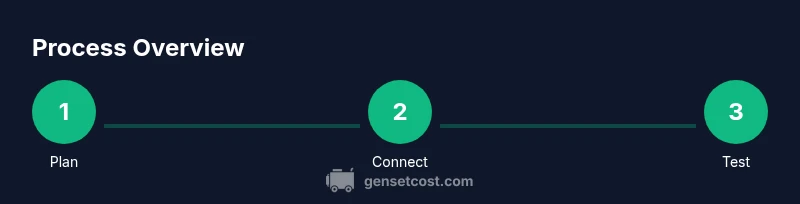
- 1
Assess safety, permits, and documentation
Begin by verifying that you have the right to modify electrical circuits and install a transfer device. Confirm local permit requirements and determine whether a professional review is needed. Document your plan, generator model, and switch type before touching any equipment.
Tip: Check with your utility or city building department about permit prerequisites before purchasing equipment. - 2
Choose the interconnection method
Select the transfer device that best fits your loads and budget: manual transfer, automatic transfer switch, or an interlock kit. Ensure the device is compatible with your panel and generator outlet.
Tip: Automatic switches provide seamless transfer but may require panel upgrades. - 3
Prepare the location and panel
Position the generator outdoors on stable ground with adequate clearance. Open the main panel only when the system is de-energized and safely grounded. Verify all circuits that will remain energized are isolated according to your plan.
Tip: Maintain a clean, dry workspace and keep pets away during work. - 4
Make the interconnections
Install the transfer device following the manufacturer’s instructions. Route conductors in proper conduit, attach ground bonding, and seal enclosures to prevent water intrusion. Do not connect the generator directly to any branch circuit without a transfer device.
Tip: Use the correct gauge wire for your generator rating. - 5
Test the system with a controlled load
With power isolated and the transfer device engaged, test essential loads to verify the switch operates correctly and no backfeed occurs. Observe for overheating, strange smells, or tripped breakers during the test.
Tip: Have a helper observe the panel while you test for safety. - 6
Document and maintain
Record the test results, device model numbers, and maintenance schedule. Create a yearly check plan with your electrician to ensure continued safety and compliance.
Tip: Keep a maintenance log and set reminders for periodic service.
People Also Ask
Do I need a permit to hook up a generator to my home?
In most jurisdictions, a permit and inspection are required when adding a transfer switch or making electrical alterations to your home. This ensures compliance with safety standards and protects utility workers.
Most places require a permit and inspection for generator hookups, so check with your local authority.
What is backfeeding, and why is it dangerous?
Backfeeding occurs when generator power flows back onto utility lines. It can injure line workers and damage the grid. A proper transfer device prevents backfeeding and keeps the system isolated.
Backfeeding sends power into utility lines and endangers workers; use a transfer switch to prevent it.
Manual vs automatic transfer switches vs interlock kit—what’s the difference?
Manual transfer switches require you to switch power during outages; automatic transfer switches detect outages and switch automatically; interlock kits modify the panel to allow safe generator connection. Each option prevents backfeed when installed correctly.
Manual switches need you to flip them; automatic switches do it for you; interlocks make panels compatible.
Can I install this myself, or should I hire a professional?
Electrical work with high current is hazardous and subject to codes. A licensed electrician can ensure compatibility, permit handling, and a safe installation.
Electrical work can be dangerous; hiring a pro is usually the best move.
I only want to power a few essential circuits. Is that possible?
Yes. A transfer device can be configured to energize a subset of circuits. Prioritize critical loads and verify that wiring supports the planned profile.
Yes, you can power just the essentials with a proper transfer setup.
Watch Video
Key Takeaways
- Size your load and plan essential circuits first
- Use a listed transfer device to prevent backfeed
- Obtain permits and inspections for safety and compliance
- Hire a licensed electrician for installation and verification
- Regularly test safety detectors and maintain equipment