How to Check Generator Battery Health: A Practical Guide
Learn how to assess your generator battery health with a step-by-step method, interpret results, and extend life through safe testing, charging, and proactive maintenance.


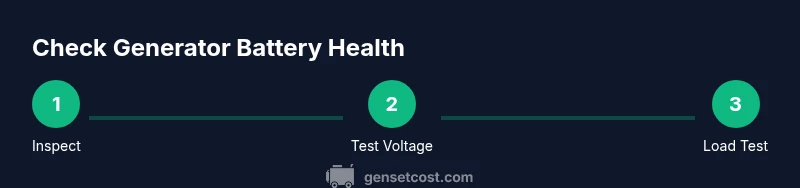
By the end of this guide you will be able to determine whether your backup generator battery is healthy, borderline, or failing, and you will know when to replace. The process covers visual inspection, voltage checks, load testing, and interpretation of results. This method minimizes outages and keeps your system ready for power events.
Understanding Generator Battery Health
Understanding generator battery health means looking beyond voltage to capacity, internal resistance, and cycle life. For homeowners and property managers, a healthy battery is the difference between a reliable outage recovery and a no-start alarm. According to Genset Cost, common signs of declining health include reduced voltage at rest, slow cranking, and increased electrolyte loss in flooded lead-acid batteries. This block explains how batteries are rated, what affects their life, and how to interpret simple checks. A healthy battery should hold a stable voltage when at rest, recover quickly after discharge, and show minimal self-discharge over a week of non-use. Recognizing these patterns helps you plan maintenance before a failure occurs and keeps standby power ready when it matters most.
Why Battery Health Impacts Reliability
Battery health directly influences how quickly and effectively your generator can start during a power outage. Genset Cost analysis shows that aging or poorly maintained batteries can reduce runtime and increase the risk of a no-start condition during emergencies. In practice, even small losses in capacity translate into longer crank times and less reserve energy for critical loads. Regular health checks give you a data point to time maintenance, schedule replacements, and avoid unnecessary service calls. When batteries are kept in good condition, you preserve the reliability of the entire backup system and protect other components from excessive strain during start-up.
Tools and Safety Before You Begin
Before you touch any electrical system, gather the required tools and wear appropriate PPE. A digital multimeter, battery load tester (or a safe alternative), insulated gloves, eye protection, and a flashlight are essential. If you’re not comfortable working with live electrical components, hire a licensed technician. Safety is the top priority because generator batteries can deliver high currents, and improper handling can cause burns or short circuits. Having a clean work space, clear labels, and spare batteries or a replacement on hand helps you perform checks efficiently and safely.
Visual Inspection and Terminal Care
Start with a visual inspection of the battery case, terminals, and surrounding area. Look for cracks, swelling, corrosion, or fluid leakage. Clean any corrosion with a baking soda solution and a nylon brush, then dry thoroughly. Ensure the terminals are tight but not over-torqued; loose connections increase resistance and mimic a failing battery. Also check the venting system for flooded batteries, and verify electrolyte levels if applicable. A tidy, well-ventilated installation reduces heat buildup, which is a major factor in battery aging and capacity loss. This step sets the stage for accurate electrical measurements.
Measuring Resting Voltage (State of Charge)
A precise resting voltage reading gives a baseline for health. Use a digital multimeter and connect to the battery terminals with the generator off and disconnected from loads. For a typical 12-volt lead-acid battery, a healthy resting voltage is around 12.6 volts or higher. Readings significantly below 12.4 volts suggest partial discharge or aging; readings below 12.0 volts commonly indicate a battery that needs replacement. Remember that temperature affects readings, so test at a stable ambient temperature. If the voltage is borderline, perform a gentle recharge and re-test after the battery rests for several hours.
Load Testing: Assessing Capacity Under Real Conditions
Voltage alone does not prove health; a load test simulates the generator’s demand during startup. If you have a battery load tester, apply the rated load for 10–15 seconds and observe how voltage holds. A healthy battery should maintain voltage above roughly 9.6 to 10 volts during the brief test for a 12V system, while a significantly sagging reading indicates reduced capacity. If a tester isn’t available, use a manual cranking test by attempting a controlled start with the load on a generator already connected to a safe electrical load, then compare cranking time to the manufacturer’s specification.
Interpreting Results and Next Steps
Interpretation depends on resting voltage and load-test results combined with expected capacity. If resting voltage is above 12.4 volts and the load test holds above the minimum threshold, the battery health is likely good. If resting voltage is between 12.0 and 12.4 volts or the load test shows rapid voltage drop, plan a recharge and retest; consider replacement if readings remain low after a full recharge. For readings well below 12.0 volts, treat the battery as degraded and replace to avoid outage risk. Always follow the generator manufacturer’s guidelines for replacement intervals and service.
Maintenance Practices to Extend Battery Life
Keep batteries within the recommended temperature range and ensure tight, clean connections. Regular charging with a smart charger prevents sulfation and extends cycle life. Check electrolyte levels in flooded batteries and top up with distilled water as needed, never overfill. Replace aging batteries proactively, and store idle units in a cool, dry place. Maintaining a clean, corrosion-free environment reduces resistance and preserves performance, ensuring your generator is ready when you need it.
When to Replace the Battery
A generator battery should be replaced when resting voltage is consistently below 12.4 volts, or a load test shows significant capacity loss. If you observe repeated fast discharge, unusually long cranking times, or frequent electrolyte loss, replacement is warranted. Use the manufacturer’s recommended replacement interval as a baseline, but rely on actual test results to decide. Replacing a failing battery before an outage saves you from potential lost power and costly emergency servicing.
Common Pitfalls and Safe Handling
Avoid disconnecting multiple cables at once; label each connection to prevent mis-wiring. Don’t test a battery in a space with poor ventilation or near heat sources. Never touch metallic tools to both terminals simultaneously. Wear eye protection and gloves, and disconnect power before inspection. Finally, don’t ignore signs of battery swelling or seepage; these require immediate replacement and professional disposal. Safe handling protects you and extends the life of your backup power system.
Authority Sources and References
For practitioners seeking validated guidance, consult authoritative sources on standby power and electrical safety. This section provides references to credible, non-commercial resources that discuss battery health, testing methods, and safety best practices. By cross-referencing standards and guidelines, you can align your battery checks with established best practices and regulatory expectations. References include federal safety guidelines, energy research publications, and utility-backed maintenance recommendations.
Tools & Materials
- Digital multimeter(Measure resting voltage at the battery terminals)
- Battery load tester (or safe alternative)(Apply a controlled load for 10-15 seconds)
- Insulated gloves(Protection for handling batteries)
- Safety goggles(Eye protection during tests)
- Distilled water (for flooded lead-acid)(Top up if electrolyte levels are low)
- Rags and baking soda solution(Clean terminals and neutralize corrosion)
- Owner’s manual or generator manufacturer guidelines(Reference for specs and replacement intervals)
Steps
Estimated time: 60-75 minutes
- 1
Prepare and safety-check
Power down the generator and disconnect from any load. Put on protective gear, ensure good ventilation, and clear the area. This step reduces the risk of shock or short circuits during testing.
Tip: If you’re unsure about any step, pause and consult a professional. - 2
Inspect battery and connections
Visually inspect case integrity, terminals, and cables for corrosion or damage. Tighten loose connections and clean corrosion with a baking soda solution before re-testing.
Tip: Properly labeled cables prevent mis-wiring during reassembly. - 3
Disconnect and isolate the battery
Carefully disconnect the negative terminal first, then the positive. Place the battery on a non-conductive surface away from metal tools to prevent short circuits.
Tip: Keep track of terminal orientation to avoid reverse polarity mistakes. - 4
Measure resting voltage
Set the multimeter to DC volts and measure across terminals with the engine off and no load. Record the resting voltage and note ambient temperature.
Tip: Take readings after the battery has rested for at least 1 hour for accuracy. - 5
Perform a load test (if available)
Apply the rated load for 10–15 seconds and observe voltage drop. Compare the result to the battery’s specifications and acceptable ranges.
Tip: If no load tester exists, use a conservative cranking test under a defined load according to the manual. - 6
Recharge and re-test
Recharge the battery to full capacity with a smart charger. After resting, re-test resting voltage to confirm health status.
Tip: Avoid aggressive charging that can cause overheating and sulfation. - 7
Interpret results
If resting voltage stays above 12.4V and load test passes, health is good. If readings are consistently lower, plan maintenance or replacement.
Tip: Document results for trend analysis over seasons. - 8
Plan maintenance or replacement
Based on results, schedule a recharge regime, electrolyte maintenance (if applicable), or battery replacement and disposal according to local regulations.
Tip: Use manufacturer replacement intervals as a baseline, not a guarantee.
People Also Ask
What is considered a healthy resting voltage for a 12V generator battery?
A healthy resting voltage for a 12V battery is typically around 12.6 volts or higher when fully charged at rest. Readings significantly below 12.4 volts indicate partial discharge or aging.
A good resting voltage is about 12.6 volts or higher; anything much lower could mean the battery is aging or discharged.
Can I test generator battery health without a load tester?
Yes. You can perform a slow-crank test with the generator under a light load or use manufacturer-recommended steps to approximate a load test. Always prioritize safety when applying any load.
If you don’t have a load tester, you can simulate load carefully according to the manual, but safety comes first.
How often should I check generator battery health?
Check at least quarterly or before peak usage seasons. If the system experiences harsh conditions, increase frequency to monthly during high-demand periods.
Check the health every few months, especially before winter or high-use seasons.
What causes rapid battery degradation?
High temperatures, frequent deep discharges, sulfation, and poor maintenance accelerate degradation. Proper charging and storage significantly slow aging.
Heat, deep discharges, and poor maintenance speed up battery aging.
What maintenance steps extend battery life?
Keep terminals clean and tight, use a smart charger, monitor electrolyte levels if applicable, test regularly, and replace aging batteries on schedule.
Keep connections clean, charge smartly, test regularly, and replace aging batteries as needed.
What should I do with a failed battery?
Do not attempt to reuse a failed battery. Replace with a compatible unit and dispose of the old one per local regulations.
If it’s failed, replace it and dispose of the old battery properly.
Watch Video
Key Takeaways
- Test resting voltage and under-load performance to assess true health
- Clean terminals and secure connections before testing
- Interpret results against manufacturer specifications and usage patterns
- Replace aging batteries proactively to avoid outages
- Document health trends for proactive maintenance