How to Clean Generator Fuel Filter: A Step-by-Step Guide
Learn how to safely clean your generator fuel filter with this comprehensive guide. Follow practical steps to prevent contamination, protect your engine, and ensure reliable backup power from Genset Cost.


Learn how to clean generator fuel filter safely, including when to clean, what tools you need, and how to verify proper flow. Following these steps helps prevent fuel contamination and ensures reliable backup power, a strategy supported by the Genset Cost team.
What a generator fuel filter does and why cleaning matters
The fuel filter in a home generator protects the engine from dirt, rust, and varnish carried by the fuel. Over time, tiny particles can clog the filter media or its passages, restricting flow and causing hard starts, reduced power, or stalling. Regular inspection and cleaning—or timely replacement—helps maintain consistent fuel delivery and prolongs engine life. According to Genset Cost, a clean fuel filter reduces upstream contamination and supports reliable backup power during outages. Different generators use different filter designs; some are spin-on filters that unscrew, others are inline filters that clamp into fuel lines, and some are integrated into the carburetor or fuel pump assembly. Cleaning is more practical for mesh screens or replaceable cartridges; paper cartridges usually cannot be rejuvenated and should be replaced. The decision to clean versus replace depends on observed condition: clogging, visible sediment, moisture contamination, or a strong fuel odor. The key is to avoid forcing dirty fuel back into the tank and to avoid introducing air into the fuel system.
Inspecting the fuel system for signs of contamination and clogging
A healthy fuel system delivers steady fuel flow and smooth combustion. Signs that the fuel filter needs attention include: engine stumble at idle, hesitation during acceleration, loss of power under load, longer cranking times, or a noticeable drop in fuel pressure. If you observe dark or gummy residues on the filter element or a strong gasoline smell near the filter area, plan to service soon. While some light sediment is normal in older systems, persistent contamination can indicate bad fuel, water in the line, or a poorly seated filter. Reference your unit’s manual for the filter type and service recommendations, and do not attempt to force-clean a cartridge that is designed to be replaced.
Safety and prep before you start
Safety comes first when handling fuel systems. Work in a well-ventilated outdoor area or a garage with doors open; keep flames and sparks away. Wear protective gloves and safety glasses, and have an absorbent material handy for spills. Disconnect the battery if your generator has an electrical shutdown option, and if possible, relieve system pressure by closing the fuel valve and loosening the filter fitting slowly. Place a catch pan under the fuel line to collect any drips and have absorbent towels ready. Review the maintenance manual and ensure you have the right replacement filter if you decide on replacement rather than cleaning.
How to prepare and gather the right tools
Organize the workspace and lay out the necessary tools so you can complete the task efficiently. Common items include a fuel filter wrench or pliers, a clean container for drained fuel, rags, a small funnel, fresh fuel, and a new filter (if replacing). If your unit uses a cartridge-style filter, you may need a threaded adapter or a wrench to loosen the housing. Keeping a clean, stable surface and good lighting helps you see dirty connections and avoid cross-threading. Always ensure you have a spare fuel filter compatible with your generator's model and, if required, fresh fuel to prime the system after service.
Step-by-step overview of cleaning vs replacing the filter
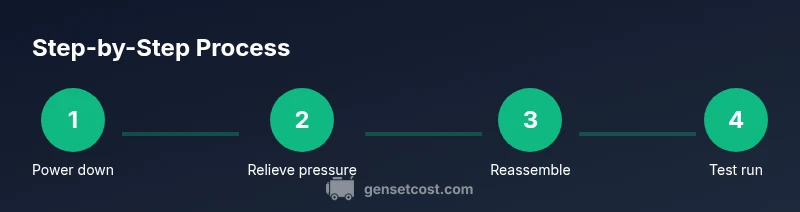
The rest of this article provides a detailed, hands-on workflow. In general, you will determine whether cleaning or replacement is appropriate, safely isolate the fuel system, remove the filter, perform cleaning or install a new cartridge, and then reassemble. After reassembly, you will prime the lines to remove air, check for leaks, and test run the generator to confirm proper operation. For some designs, cleaning the mesh screen is acceptable; for others, replacing a cartridge is the recommended approach. Always follow your manual and local regulations when disposing of used filters.
Post-clean checks and restart procedure
After cleaning or replacing the filter, verify the assembly is secure and that there are no fuel leaks at any connection. Reconnect the battery if you disconnected it, and slowly start the engine to observe idle behavior. If the unit has a fuel shutoff valve, ensure it is returning to the ON position and monitor for leaks during the first 5–10 minutes of operation. If you sense a fuel odor, a leak, or misfiring, shut down immediately and re-inspect the connections. Document the service in a maintenance log for future reference.
Common mistakes and how to avoid them
A frequent error is assuming all filters can be cleaned. Disposable cartridges or certain inline designs should be replaced rather than cleaned. Another mistake is not relieving pressure properly, which can cause fuel spray. Failing to catch spills can create a fire hazard. Finally, neglecting to prime the fuel system after reassembly can result in hard starts or air locked lines. Take your time, follow the manual, and double‑check every connection.
Maintenance best practices and long-term care
Regular maintenance improves reliability and extends the life of your generator. Schedule filter checks during your routine service window and keep spare filters on hand. Record service dates, fuel quality observations, and performance notes in a dedicated log. If you routinely store fuel, consider stabilizing additives and regular fuel rotation to minimize varnish and water contamination. By pairing routine filter care with clean, high-quality fuel, you can reduce unexpected outages and keep the backup system ready for operation.
Tools & Materials
- Gloves (nitrile or natural)(Keeps hands clean and protects skin from fuel)
- Safety glasses or goggles(Protect eyes from splashes)
- Fire-safe catch pan(Catch drips; position under fuel line)
- Rags or shop towels(Wipe spills; avoid lint)
- Flat-head or filter wrench(Use if filter is tight or difficult to loosen)
- New fuel filter (if replacing)(Check compatibility with model)
- Replacement filter cartridge (if cartridge design)(Ensure proper rating and style)
- Fresh fuel for priming(Avoid using old fuel during restart)
- Clean solvent or approved fuel-system cleaner(For cleaning metal mesh filters only)
- Flashlight or headlamp(Improve visibility in shaded areas)
- Drain pan for fuel disposal(Dispose of fuel per local regulations)
- Manual or model-specific guide(Reference for model-specific steps)
Steps
Estimated time: 30-45 minutes
- 1
Power down and cool the generator
Turn off the unit and allow it to cool for at least 10 minutes. If equipped, disconnect from any load and isolate the unit from the fuel supply by closing the shutoff valve.
Tip: Cooling reduces burn risk and makes fast work of fittings. - 2
Relieve pressure and locate the filter
Relieve fuel pressure by slowly loosening the filter connection or following the manufacturer’s procedure. Identify the exact fuel filter location (inline, spin-on, or cartridge) and prepare a catch pan.
Tip: Keep a clean area around the filter to avoid contamination. - 3
Disconnect lines and remove the filter
Carefully loosen fittings and detach fuel lines. Remove the filter housing or cartridge, keeping any gaskets or O-rings in place if reuse is possible.
Tip: Have replacement gaskets ready in case the old ones are damaged. - 4
Clean or replace the filter media
If cleaning is allowed for your design, rinse the mesh or cartridge with clean fuel or approved cleaner and inspect for damage. Replace the filter entirely if the media is degraded, swollen, or stained.
Tip: Never use dirty rags to wipe the filter media. - 5
Reinstall and prime the fuel system
Reassemble the filter housing and reconnect lines. Prime the system by opening the fuel valve and cranking briefly to purge air, or follow your manual's priming method.
Tip: Watch for air pockets; ensure fittings are snug but not over-tight. - 6
Check for leaks and test run
Start the generator and run at no-load briefly, then under load if safe. Inspect every connection for leaks during the first 5–10 minutes of operation.
Tip: If you smell fuel or see a drip, shut down and recheck connections.
People Also Ask
Do I always need to replace the fuel filter instead of cleaning?
Not always. Some mesh or inline filters can be cleaned, but many disposable cartridges must be replaced to ensure proper filtration. Always follow the manufacturer’s guidance for your model.
Some filters can be cleaned, others must be replaced. Check your manual for model-specific guidance.
Can I run the generator without a fuel filter?
Running without a filter can allow contaminants into the engine, causing damage. If the filter is missing or damaged, replace it before starting the unit.
Never run a generator without a fuel filter; replace it if missing or damaged.
How often should I clean or replace the fuel filter?
Interval depends on usage, fuel quality, and design. Plan based on the manual and visible condition rather than a fixed calendar date, and perform inspection during routine service.
Follow your manual; check for contamination and replace when needed.
What safety gear should I wear during this task?
Wear gloves and safety glasses, and work in a ventilated area to handle fuel safely and avoid splashes.
Put on gloves and safety glasses; ensure good ventilation.
What if I notice a fuel odor or a leak after reassembly?
If you smell fuel or see a leak, shut down the unit, recheck connections, and address the leak before attempting another start.
If you smell fuel, stop and recheck the connections.
Is it safer to have a professional handle my fuel filter?
For complex systems or embedded filters, professional service can ensure safety and correct filtration without risking spills.
Consider a pro if your system is complex or you're unsure.
Watch Video
Key Takeaways
- Identify filter type and service approach before starting
- Relieve pressure and work in a safe, ventilated area
- Clean or replace only per design; do not force-clean disposable media
- Prime and test for leaks to confirm a successful service
- Maintain a log of service dates and observations