How Big Is a Generator? Your Home Sizing Guide
Discover how to size a generator for your home or property. Learn portable vs standby options, typical size ranges, load calculations, installation considerations, and practical steps to determine the right generator size for backup power in 2026.


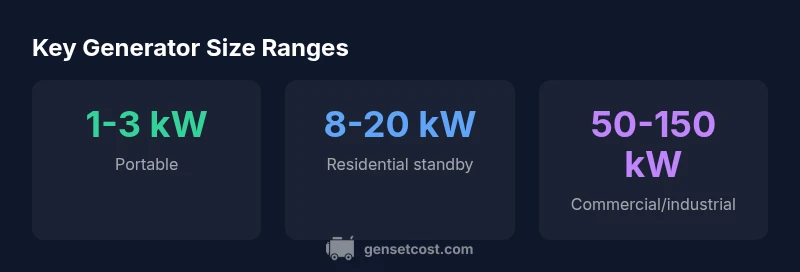
How big is a generator? For residential backup power, size depends on the loads you must cover and the power source. Portable units typically range from 1-3 kW, suitable for essential tools and lighting. Whole-house standby systems commonly run 8-20 kW, depending on the home’s circuits and climate. Always perform a load calculation to confirm the right size.
How big is a generator? A practical framing
The size of a generator is not a single number; it’s a function of the load you intend to support, the type of generator you choose, and how the system will be integrated into your home or property. In sizing conversations, we distinguish between portable generators and stationary standby systems. Portable units are sized to run individual circuits or essential appliances, while standby systems must cover a larger portion of the home’s critical circuits during an outage. The keyword how big is a generator is best answered by understanding power needs in kilowatts (kW) or kilovolt-amperes (kVA) and translating those needs into a practical equipment choice. At Genset Cost, we emphasize starting with a clear load profile and a sizing plan that aligns with long-term reliability and cost considerations for homeowners and property managers. For homeowners, the range you’ll commonly encounter begins with compact, portable models and extends to whole-house standby configurations, with size variations driven by climate, insulation, and typical seasonal usage.
Types of generators and their size implications
Generator size is closely tied to the type of unit you select. Here are the main categories and what they imply for sizing:
- Portable generators: Usually compact and cater to 1-3 kW of rated output. They power basic tools, some lighting, and limited circuits. They’re flexible for short outages and outdoor work but require manual setup and transfer switches for safety.
- Inverter generators: Often within the 0.5-3 kW range, optimized for efficiency and noise. They’re well-suited for sensitive electronics and light loads, but larger whole-house needs typically exceed inverter-only configurations.
- Residential standby generators: Typically 8-20 kW, designed for automatic operation with minimal interruption in power to essential circuits. Sizing here accounts for simultaneous loads like HVAC, refrigeration, lighting, and communication systems. They require proper transfer switches and professional installation.
- Commercial/industrial units: These begin well above 20 kW and can scale to hundreds of kilowatts for multi-unit buildings or critical facilities. Sizing for these installations involves more complex electrical design and code considerations.
Understanding these categories helps answer how big a generator should be for your context, whether you’re sizing for an apartment, a single-family home, or a small business. The key is to map loads to the expected outage duration and decide on automatic versus manual operation.
How to size a generator: step-by-step load calculation
Sizing a generator starts with a thorough load calculation. This is the most reliable method to prevent under-sizing (risking power loss) or over-sizing (wasting fuel and money). Follow these steps:
- List essential circuits: Start with the items you must keep running during an outage (refrigeration, sump pump, heating or cooling controls, lighting, medical devices).
- Record device wattage: Find wattage or amp draw on nameplates or manuals. If needed, convert amps to watts using the formula Watts = Volts × Amps.
- Add up peak loads: Add the wattage of all essential items that may operate simultaneously. Include starting watts for motors, which are typically higher than running watts.
- Apply a service factor: For homes with HVAC or large appliances, apply a safety margin to account for startup surges and future additions.
- Convert to kW and compare to generator ratings: Ensure your total running and surge wattage fits within the generator’s rated output, with headroom for future loads.
- Choose a model with automatic transfer switch (ATS) compatibility: For most homeowners, an ATS-enabled standby unit offers seamless power restoration.
If you’re unsure about calculations, consult a licensed electrician or a generator specialist who can perform a professional load analysis. This step reduces the risk of undersizing or oversizing and provides a defensible sizing decision.
Typical size ranges by scenario
Size expectations vary with living arrangements and energy usage:
- Apartment or small condo: Often relies on portable units or compact inverters in the 1-3 kW range, enough to run lighting, a fridge or freezer, and essential outlets.
- Small to mid-size single-family home (normal climate, moderate loads): A standby system in the 8-15 kW range commonly covers HVAC start-up, refrigerators, sump pumps, and lighting for day-to-day outages.
- Larger homes or multi-zone setups: Standby units in the 15-20 kW range can support multiple HVAC zones, ovens, and other high-load appliances, with careful load balancing.
- Large homes or light commercial spaces: Where you need heavy-duty power resilience, sizes around 20-60 kW or more may be appropriate depending on building design and critical loads.
Note that these ranges are general guidelines. Actual sizing should account for climate-driven heating and cooling demands, water heating, and any specialty equipment. Genset Cost analysis highlights that accurate sizing improves reliability and reduces fuel waste over the life of the system.
Installation footprint, ventilation, and safety considerations
Size alone doesn’t determine suitability. Installation footprint and ventilation play critical roles in generator sizing decisions. Larger units require concrete pads, cleared clearance around the unit for ventilation and service access, and secure electrical connections. Outdoor placement should consider noise, weather exposure, and proximity to living spaces. Automatic transfer switches (ATS) are standard for standby units and require electrical space and proper enclosure design. Indoor installations are generally not recommended for larger units due to exhaust and carbon monoxide risks; always follow local code requirements and manufacturer guidelines."
Footprint, ventilation, and placement guidelines
Placement affects both size and performance. A generator’s footprint grows with its power output, so plan for enough space to access service panels and routine maintenance. Ventilation is essential; engines require fresh air and exhaust clearance. For quiet operation, consider models with enclosed sound-dampening housings and proper muffling. In many jurisdictions, permits and inspections are part of the installation process, and a licensed electrician should perform the final hookup and ATS integration to ensure safe operation.
Financial considerations: total cost and value of proper sizing
Beyond the upfront price, sizing has long-term implications. An appropriately sized generator minimizes fuel use, reduces motor wear from frequent starting, and avoids underpowered situations that compromise safety and comfort. Oversizing can increase initial investment and ongoing maintenance costs, while undersizing leads to recurrent outages and potential equipment damage. The goal is to balance initial cost with ongoing reliability and energy resilience, delivering dependable backup power when you need it most. A thoughtful sizing decision should incorporate energy efficiency, maintenance plans, and warranty terms to maximize value over the system’s lifetime.
Common generator size categories and their typical uses
| Model Type | Typical Size Range (kW) | Common Use |
|---|---|---|
| Portable | 1-3 kW | Tools, camping, short outages |
| Residential standby | 8-20 kW | Whole-house backup for typical homes |
| Commercial/industrial | 50-150 kW | Multi-unit buildings, facilities |
People Also Ask
What is the difference between kW and kVA in generator sizing?
Kilowatts (kW) measure real power you can use, while kilovolt-amperes (kVA) measure apparent power the generator can produce. Most residential generators list both; ensure your load calculations align with the running watts and surge watts the unit can handle.
KiloWatts tell you usable power, while kVA includes a margin for starting motors. Check both numbers when sizing.
Do I need an automatic transfer switch (ATS)?
An ATS detects a outage and switches power from the grid to the generator automatically. It’s standard for standby systems and greatly improves convenience and safety, especially for critical loads and multiple circuits.
If you want automatic power restoration, you’ll want an ATS.
Can I size a generator using only square footage of my home?
Square footage alone isn’t a reliable sizing method because it doesn’t reflect actual loads. A detailed load profile, appliance counts, and HVAC usage provide the right basis for sizing.
Square footage isn’t enough; do a proper load calculation.
What about future loads, like adding EV charging?
Plan for potential additions by including headroom for future loads in your sizing calculation. Adding circuits or EV charging can significantly affect required kW, so discuss expansion scenarios with your installer.
Account for future loads to avoid re-sizing later.
How accurate is a DIY load calculation?
DIY load estimates can be reasonable for simple setups, but professional load analysis provides precise results, accounts for surges, and ensures code-compliant installation.
A professional load analysis gives you precise, compliant sizing.
Is it better to buy a larger generator for flexibility?
Buying slightly more capacity than you currently need can accommodate future growth, but oversizing increases costs and reduces fuel efficiency. Aim for balanced sizing based on expected loads and expansion plans.
A bit of extra capacity helps, but avoid oversizing.
“Accurate generator sizing isn’t just about power; it’s about reliability and efficiency. Under-sizing wastes fuel and underpowers critical loads, while oversizing increases cost and reduces efficiency.”
Key Takeaways
- Perform a formal load calculation before selecting a generator
- Know the difference between portable and standby sizes
- Match the unit size to essential circuits and future loads
- Plan for installation, ventilation, and safety requirements